|

 FAMILY TREE HOME
The Burnett Branch
UPDATED 9 May 2016 |


|
| |
|
He was, however, by no means a model student, and, although he entered Trinity College, Cambridge, at thirteen, he was soon removed for idleness and disobedience." He then received private instruction from tutors and was subsequently called to the bar. About May 1712 he made an impudent love-match with a daughter of Dean Stanhope, his wife dying within three years from a broken heart, it was said, due to a previous attachment. Burnet was a man of ability who had his own way to make in the world. Fortunately, he was the godson of King William and Queen Mary and had numerous friends in high places. On April 19, 1720, he was appointed governor of New York and New Jersey. He promptly sailed from England on July 10 and arrived at New York on September 16. Both at this post and at his subsequent one in Massachusetts, his record was an honorable one. New York, owing to its geographical position with relation to the French in Canada by way of Lake Champlain, and to the Indian fur trade routes to the westward through the Mohawk Valley, was the key colony in regard to the entire colonial Indian policy. Burnet at once sensed the importance of the Indian problem. The English were able to import the goods used in the Indian trade to purchase furs at much lower prices than could the French at Montreal, and this should have given them a great advantage in dealing with the savages (politically incorrect). But although the New Yorkers held a powerful weapon in their hands in the cheapness of their trading goods, this was blunted to a great extent by the fact that there were important merchants who found it more profitable and easier to sell their goods to the French than to trade them with the Indians. Burnet realized that by this French trade the English were handing their strongest weapon to their enemies. It was his endeavor to prevent this and to rectify the Indian policy of the English which furnished the main-spring of his policy as governor. In his first year he secured the passage of a law prohibiting the Canadian trade and subsequently established a trading post at Tirondequot where goods were sold to the savages at half the price at which the French sold them. His Indian policy was not without mistakes in detail but was wise and farsighted in principle. He at once, of course, came into conflict with powerful mercantile forces which cared more for their privat gaoin than for the public benefit. His struggle with certain mercantile groups and with the Assembly became increasingly bitter. He made enemies of such powerful families as the Philipses and De Lanceys, and his action in setting up a court of chancery was roundly denounced by the Assembly in 1727. The English government transferred him to Massachusetts and he left for Boston soon after the arrival of his successor on April 15, 1728. The few months which were left to him before death were marked by the culmination of the contest between the Massachusetts Assembly and governor over the salary question. The argument took constitutional ground and both sides stated their posiitons, which were irreconcilable, with greater clearness and fulness than at any other point in the interminable wrangle (see E.B. Greene, The Provincal Governor in the English Colonies of North America, 1898, pp. 171 ff.) Burnet's stand was honorable throughout and was in no way dictated by avarice, from which vice he was entirely free. Worn out by the work of his office, he died September 7, 1729. While governor of New York, he had married Anna Maria (Mary Van Horne), daughter of Abraham Van Horne and Mary Prevoost of that city. Burnet was distinctly above the average of colonial governors. He was able, cultivated, charitable, just, genuinely solicitous to promote the welfare of the provinces he governed and not unwilling to make personal sacrifices for their good. His struggles with the Assemblies were always for principles and not for personal advantage.
(Some facts as to Burnet's early life may be found in A Life of Gilbert Burnet (1907), by T.E.S. Clarke and H.C. Foxcroft. His will and some other documents were printed by Wm. Nelson in Original Papers Relating to William Burnet (1897). For his career in NY and NJ much material may be found in the NJ Archives, I ser., IV, V, VI, and in Docs. Relating to the Colonial History of New York (London 1757) may also be consulted. For Mass. see Thos. Hutchinson, History of Mass. Bay (London, 1828), vol. III; A Collection of the Proc. of the Great and General Court of HIs Majesty's Province of the Mass. Bay (1729); Green's Provincial Governor as cited above, and the general histories.
William's sister, Elizabeth, married Richard West, Lord Chancellor of Ireland in 1714.)
| |
|
Father of Brig.Gen. Henry L. Burnett | |
|
Youngstown Evening Register and Tribune
This district was then an unbroken wilderness. Here in the year 1801, April 11th, his son Henry was born, and here in the midst of the limitless forests many of the years of his boyhood were passed. Later and along the year 1808 or 9 Mr. Samuel Burnett moved to Warren, Ohio, and he and old Mr. Quinby (to whom Mrs. Samuel Burnett was related) erected a large log cabin on what is now known as Quinby Hill, and both families lived in it for some time. Mr. Burnett's youth was passed with no opportunities for education, and what little he acquired was under the instruction of his parents at home. His time as a boy was mainly devoted to hard work in assisting his father in his hard battle with rugged nature, and in helping him to gain a livelihood for a large family. In those early days, when white settlements were far apart, when there were hundreds of Indians to every white man, when there were no roads or bridges or means of communication between the white settlers save by blazed paths through the far stretching dark old forests, when there were no mills, stores, shops, or any of the conveniences of civilization, struggles had to be encountered and hardships and sufferings endured of which we in this later time can have little or no conception. Under these circumstances Mr. Henry Burnett was reared. Without the advantages of any early education, he yet was endowed with great natural abilities, and with an iron constitution.
When making estimates for roads, railway tracks or other earth works, he would run his own levels, and make, in his head, without aid of paper or pencil, his computations of cubic feet or yards of excavation or fill; and in erecting buildings he would, in the same manner, compute the number of perch of stone in the cellars, the number of feet of boards and timber, etc., required for the buildings, never placing a figure on paper until the calculation was complete and then putting down only results. By this mathematical system of his own, he used also, in the prime of his life, to compute very accurately and rapidly, the interest on contracts or notes, on which irregular payments had been made. His skill in this respect has often been tested by accomplished scholards, and it was found that he could make his computations and give results much more rapidly than they with paper and pencil.
Mr. Burnett moved to Youngstown from Austintown about 32 or 3 years ago, having bought the farm and for many years lived on the spot where Wm. J. Edwards, Esq., now resides. He bought this farm about 150 acres, for thirty-five dollars an acre, and thought he was doing well, when in a few years after, about 1846, he sold it for sixty dollars an acre. he little thought then that within half the span of his life this farm would be a part of the city of Youngstown and be worth from two to three thousand dollars per acre. When he removed to Youngstown he united with the Disciple church here, he having been one of eight who had paid for the grounds and the church building. His heart was always very ernestly with his church and its work. One year he invited the various churches to hold their yearly meeting on his farm at Flint Hill, which was done, he feeding and providing for the multitudes who came. In the latter years of his life his affections seemed to turn back to the old church at Austintown like a heart turning back with tender recollections to the scenes of its childhood; and frequently on these Sunday mornings, when the weather permitted, he would be seen driving many miles to the old church at Austintown to worship on the old spot and mingle his prayers with the brethren whom he had known and loved in the early days of his Christian life, and with whom he had fought the good fight, as he belived, for the triumph of the pure Word of God. In his last sickness he was without doubt, anxiety, or trouble in regard to his future state. His faith was unquestioning in the immortality of the soul in the divine character of Christ and His will to save and bless with everlasting peace and happiness those who believe in Him and keep His commandments. He suffered during his illness all that mortal could suffer, and his anxiety to be released and to enter upon the peace which he believed the Saviour had in store for him, became very intense. The only impatience shown by him during all his long illness and much suffering, was when told by any one that he was likely to get well. A couple of days before he died he half rose in his bed, and said to one of his children, with an appealing, supplicating look and voice, "Don't you think I will be able to get off tonight." And on the day before he died he repeated with touching fervor the following verse: "Let cares like a wild deluge come,
And often he used to start out to hunt up the poor and suffering. When he found them he would carry them food and clothing, and often brought whole families of the miserably poor and homeless into his own house and until his own table, feeding and strengthening them back into hope and courage to commence the battle of life anew. In his last illness, when many poor people were coming to his door to inquire after him, "I can't talk to these poor people, I'm too weak; but treat them with great respect; be kind to them." All through his life he had a profound sympathy for the colored people. He was among the first of the Abolitionists and old Anti-Slavery guard in this part of the State. His house was one of the permanent stations on the underground railway. Many, many times in storm and cold, has he been roused from deep slumber by the knock of the trembling fugitive, and been compelled to start forth on his long night drive, carrying the poor slave one stage further on his way towards freedom. Among those who at an early day started the Anti-Slavery agitation and discussion here were: Mr. Burnett, John Kirk, Dr. Baine, Wilson Thorne, John Holcomb, and Dr. Garlick. Two or three young men, among others Nathan Holland and J.K. Wick, concluded to test the sincerity of the AntiSlavery professions of these men and their associates; so one evening they got themselves up in the best posible imitation of Southern plantation darkeys, and started out on their rounds to visit every leading Abolitionist. They told a doleful story, and then asked for help in the way of food, clothes and money. The disguise was so perfect that all were deceived. In the main they found the persons they visited liberal, and ready to respond according to their means, but in some cases, which they casually mentioned from time to time thereafter as occasion served, they received a profusion of good wishes and abundance of sympathy, but nothing more. Mr. Burnett, thinking them the genuine article, aroused his household, had a good supper served for them, a lot of food put up in a parcel to carry with them, gave them some clothes and money, and sent them on their way with his blessing. When the fugitive slave law was passed, Mr. Burnett was in great trouble of mind. He recognized fully the obligations to his government and the general duty of loyalty and obedience to law. But here was a law to obey which might at some time bring him into conflict with the law of God as he understood it. After more trouble or shelter or succor to the flying xx. The law of God says feed the hungry, clothe the naked, succor and help those in affliction. This law says at the call of the master or the officer of the law I must turn out and help hunt down and bring back into bondage the poor fugitive; the law of God says "let the oppressed go free;" as for me I openly announce that when the poor slave comes to my door for food, shelter, clothing or help on his way to freedom, he shall have them; if fined for the act, I will pay my fine so far as I am able, if imprisoned I will patiently endure my imprisonment, but that which the Lord commands me to do that will I do, as I understand it, even unto the death", and his acts were according to his words. Many men are above the average, approach greatness in some one particular. Mr. Burnett's strongest characteristic perhaps was his broad and deep humanity, his ernest and deep sympathy with the poor, the suffering or the unfortunate.
He was a man of most deep and tender affections; towards his children it was a passion so deep and tender, so true and steadfast under all errings, that no words can compass or measure it; and few parents have ever passed from the world more deeply loved and revered than he. While he was a man of quick and violent temper, his sense of right and justice were so strong, his determination to do and be right so unyielding, that the moment his passion had passed he was ready to make apology or reparation where wrong had been done. With Mr. Burnett passes away another one of the early settlers and pioneers. They were of a grand type and character. They were sturdy, honest and brave, industrious and temperate. Something after the manner of the old puritans they carried into all the practical affairs of life their deep religious convictions and influences. They were ernest in purpose and tireless in endeavor. Striving to do no wrong, they had the manly courage to submit to no wrong. Such men, with their might courage, strength and purpose, have changed the trackless wilderness, the frowning forests and the reeking swamps into green fields, the sun-lighted hills, the pleasant valleys we have around us. Savage nature passes on before them and after them follows smiling plenty. Civil and relgious liberty are ever safe in such hands, and we should gather up and preserve the leading incidents in their lives, as our dearest public possessions. Mr. Burnett was buried Wednesday from the church of the Disciples in this city, the funeral services being conducted by the Rev. Mr. Smith and the Rev. Mr. Calvin. The funeral was attended by a large concourse of his neighbors and friends.
A good old man, a true christian, has gone to his rest.
| |
|
Music Video Biography of "The General" | |
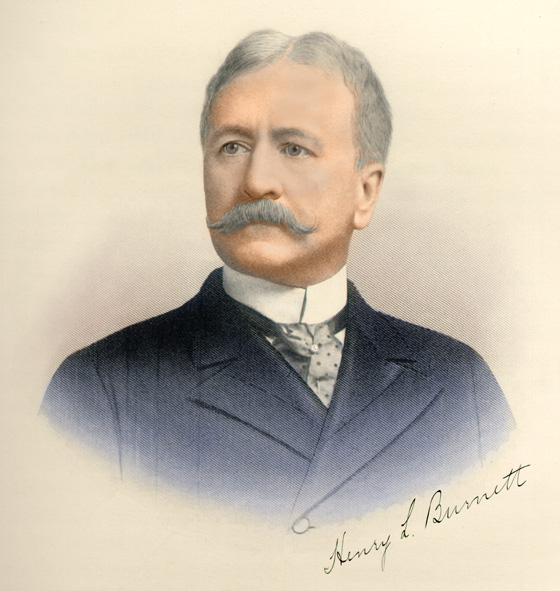
(1838 - 1916) Dictionary of American Biography II p. 298 Brigadier-General Henry Lawrence Burnett. Union soldier, lawyer was born in Youngstown, Ohio, the son of Henry and Nancy Jones Burnett, and a descendant of William Burnet, colonial governor of New York. At fifteen, determined upon getting an education, he stole away from home, equipped with a bundle of clothing, forty-six dollars, and copies of Thaddeus of Warsaw and the Lady of Lyons, and walked about one hundred miles to Chester Academy. Admitted to the school, he remained for two or three years, when he entered the Ohio State National Law School, from which he graduated in 1859. In the same year he began the practice of law at Warren. On the outbreak of the Civil War he became active in support of the Union. At one of these meetings he was challenged by a man in the audience with the question, "Why don't you enlist?" "I will," he promptly replied. He at once volunteered in Company C of the 2nd Ohio Cavalry, of which he was chosen captain on August 23. With his regiment he was sent to Missouri and saw service in the actions at Carthage (near Joplin in the southwest of the state), Fort Wayne, and Gibson, later taking part in the campaigns in Southern Kentucky. In the fall of 1863, with the rank of major, he was appointed judge-advocate of the Department of the Ohio. A year later at Governor Morton's request, he was sent to Indiana to prosecute members of the Knights of the Golden Circle and later took part in the cases growing out of the Chicago conspiracy to liberate the Confederate prisoners at Camp Douglas. In these trials, he obtained seven convictions. He was also prominent in the trial of L.P. Milligan for treason before a military commission. He was brevetted a colonel of volunteers March 8, 1865, and in the omnibus promotions of March 13 was brevetted a brigadier-general. In the prosecution of the assassins of Lincoln he served under Judge-Advocate Joseph Holt with General John A. Bingham as a special assistant, and seems to have borne a major part of the preparation of the evidence. [A paper which he wrote on this topic was given as a talk at the Goshen Presbyterian Church and is preserved at the Goshen NY Library and Historical Society.]
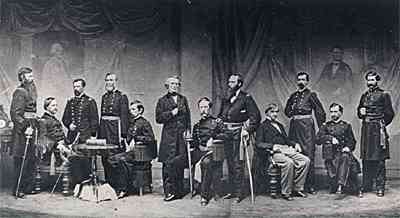 After the trials he moved to Cincinnati, where he practiced law with Judge T.W. Bartley until 1869, and then with Ex-Governors J.D. Cox and John F. Follett until 1872.
Probably his greatest case was that of the Rutland Railroad Company against John B. Page: in the closing argument he spoke for sixteen hours with a "consummate ability" that stamped him "the peer of the greatest advocate of the age" (D. McAdam and others, Bench and Bar of New York, 1899, II, 64). He was an organization Republican, a participant in the party councils, and was on especially close terms with McKinley who used to call him "Lightning Eyes Burnett." In January 1898 McKinley appointed him federal district attorney for the southern district of New York, and on the completion of his four-year term he was reappointed by Roosevelt. Burnett married three times.
His first wife was Grace (Kitty) Hoffmann died about age 26:
his second, Sarah Lansing died age 29:
His last wife was Agnes Suffern Tailer, of a prominent New York family, who survived him. In his later years he spent much of his time at his country home, Hillside Farm, Goshen, NY, where he kept a large stable of harness horses which he drove on the track of the Goshen Driving Club. In the middle of November 1915, while at the farm, he was taken ill with pneumonia. Despite his serious condition he insisted on being taken by train to his city home, where, two months later, he died. [He was buried in Goshen, NY.] 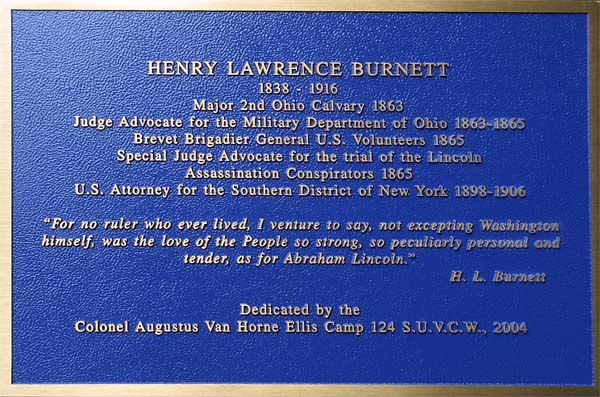
(Burnett's article, "Assassination of President Lincoln and the Trial of the Assassins," in History of the Ohio Society of New York (1906); David Miller DeWitt, The Assassination of Abraham Lincoln (1909); The Conspiracy Trial (3 volumes, 1865-1866), ed. by Benj. Perley Poor; Official Records (Army); Who's Who in America, 1912-13; obituaries in the New York Times and New York Tribune, January 5, 1916.)
|
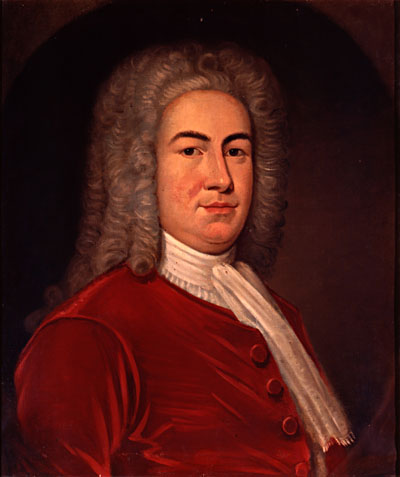 William Burnet, colonial governor who was born at The Hague during his father's temporary residence
there, was the son of Gilbert Burnet, the celebrated Bishop of Salisbury. The Bishop was not only a man of intellectual distinction himself but had a wide acquaintance among men both of mind and action so that the atmosphere of the home into which the young William was born was one to stimulate his own abilities and ambition.
William Burnet, colonial governor who was born at The Hague during his father's temporary residence
there, was the son of Gilbert Burnet, the celebrated Bishop of Salisbury. The Bishop was not only a man of intellectual distinction himself but had a wide acquaintance among men both of mind and action so that the atmosphere of the home into which the young William was born was one to stimulate his own abilities and ambition.
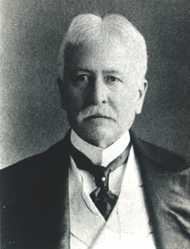 He then moved to New York, where at various times he was in partnership with E.W. Stoughton, with B.H. Bristow, William Peet, and W.S. Opdyke, and with Judge James Emott. He was for a time counsel for the Erie railroad, and was engaged in many noted cases, including the litigation over the Emma mine, in which he acted as attorney for the English bondholders.

 Royal
Royal