Biography
His Will
Writing
Politics
Timeline
Wife's Will
Letters
Descendants
|
Governor Lewis Morris
 (15 Oct 1671, Morrisania NY) (15 Oct 1671, Morrisania NY)
(25 May 1746, Trenton NJ)
+ (3 Nov 1691, NYC)
Isabella Graham.
dau of NY Atty General James Graham
(3 Jun 1673, Scotland)
(30 Mar 1752, NY)
Children:
Euphemia Morris (1692-1738)
[married Capt. Mathew Norris]
Mary Morris (1695-1745/46)
[married Capt. Vincent Pearse]
Sarah Morris (1697- )
[married Michael Kearney]
Colonel Lewis Morris (1698-1762)
[married Katrintje (Tryntie) Staats]
Chief Justice Robert Hunter Morris (1700-1764)
[married Elizabeth Stogdell]
Anne Morris (1706-1781)
[married Edward Antill]
Arabella Morris (1708-1767)
[married James Graham]
Isabella Morris (1710-1741)
[married Richard Ashfield]
Margaret Morris (1711-1784)
[married Isaac Willetts]
Elizabeth Morris (1712-1784)
[married Colonel Anthony White]
John Morris
Nancy Morris
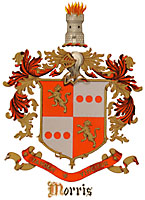
Dictionary of American Biographies p. 213
Lewis Morris (October 15, 1671 - May 21, 1746), chief justice of New York and governor of New Jersey, was the first
lord of the manor of Morrisania in New York.
In 1692 he was appointed a judge of the court of common right of East Jersey and was named a member of
Governor Andrew Hamilton's council. He vigorously supported Hamilton, but in 1698 he opposed the appointment of
Governor Jeremiah Basse on the ground that the choice had been made by only ten of the required sixteen proprietors.
His obstructive tactics resulted in his dismissal from the governor's council.
Although Governor Fletcher had issued royal letters patent in May 1697 erecting Morris' New York estate into the
manor of Morrisania, the new lord was less interested in his manorial grant than in the politics of New Jersey.
He went to England in 1702 to promote the transfer of political authority from the Jersey proprietors to the Crown.
Ambitious to be the first royal governor of the province, he was keenly disappointed when the ministry named
Lord Cornbury to be governor of both New York and New Jersey. As a member of Cornbury's council for New Jersey,
Morris became an outspoken opponent of that unscrupulous official. Dismissed from the council, he was elected
in 1707 to the assembly, where he collaborated with Samuel Jennings in formulating the protest to Queen Anne
against Cornbury's reprehensible conduct, which was largely responsible for the governor's removal from office.
After 1710, Morris supported the admirable administration of his friend Robert Hunter. He spent more time in
New York, especially after Hunter appointed him chief justice of the supreme court of that province (1715).
He continued, however, to serve upon the govenor's council for New Jersey under Burnet andd Montgomerie. With
the administration of Governor William Cosby the lord of Morrisania found himself once more at odds with the
representative of the Crown. When Cosby sought to establish a court of chancery to hear his suit against
Rip Van Dam, chief-justtice Morris pronounced the whole proceeding illegal, whereupon the governor removed
him and appointed James De Lancey, 1703-1760, in his place (August 21, 1733). Morris was elected to the
assembly from the town of Eastchester, and joined James Alexander and William Smith in championing the
popular cause against the "court party" led by Cosby and De Lancey. In 1734 he presented the assembly's
grievances in London, where he failed to secure the removal of Governor Cosby but won a vindication of
his own conduct as chief justice.
When the political connection between New York and New Jersey was severed, he became governor of the latter
province (1738). Though he had challenged the royal prerogative as represented by Cornbury and Cosby, he
permitted no questioning of his own authority. He frequently lectured the provincial assembly on its duties
and complained to the lords of trade in 1740 that the legislators "fancy themselves to have as much power
as a British House of commons, and more" ("Papers of Governor Lewis Morris," post, p.23). His administration
was marked by bitter and wordy quarrels with the assembly over taxation, support of the militia, issuance of
bills of credit, and validity of land titles.
For many years Lewis Morris was an active churchman, serving from 1697 to 1700 as a vestryman of Trinity Church
and encouraging the Society for the Propogation of the Gospel in its missionary enterprises. In 1702 he
suggested to the Society that New York, as the center of English America, was a proper place for a college
and that Queen Anne might be persuaded to grant her farm in New York toward the project. Morris' public
career was never touched by the least suspicion of political jobbery. His enemies accused him of inordinate
vanity, and no doubt he was fully conscious of his talents, which were great. The contentious spirit,
manifest in his youth, grew stronger with the passing years and involved him in controversy until his death,
which occured at "Kingsbury" near Trenton. He was buried at Morrisania with simple rites in accordance with
the terms of his will. The bulk of his estate was divided between his son Lewis, who became second lord of
the manor and his son Robert Hunter Morris, who inherited the New Jersey property.
"The Papers of Lewis Morris, Governor of the Province of New Jersey,"
 NJ Hist. Soc. Colls., vol. IV (1852) NJ Hist. Soc. Colls., vol. IV (1852)
Robert Bolton, A Hist. of the County of Westchester (2 volumes, 1848)
William Smith, The Hist. of the Late Province of NY (1829)
Archives of the State of NJ, i ser. IV-VII (1882-83)
EB O'Callaghan, Documents Relative to the Colonial History
Encyclopedia of American Literature
Morris, Lewis
(b. 1671-d. 1746)
American politician, poet
Entirely self-educated, Lewis Morris was a learned man. He taught himself to read Hebrew, Latin, German, and Arabic, and his vast private library
attested to his wide-ranging interests in law, history, philosophy, science, politics, and religion. His political writings as well as his speeches
showed touches of eloquence but were often verbose. His poetry, written for his own satisfaction, was not published. Eighteen of his poems
survive, and, not surprisingly, these have political themes. Most are satires, revealing Lewis's contempt for the masses of colonial society who
allowed themselves to be duped by greedy and immoral politicians. "The Mock Monarchy, or the Kingdom of Apes: A Poem by a Gentleman of
New Jersey in America" (circa 1725) is typical of these antidemocratic and cynical musings on demagogues and their followers.
Morris was the son of an English military officer who became a prosperous landowner in New York and New Jersey. Lewis inherited a large estate but had
little memory of his parents as both died in his infancy. He was raised by an uncle, whose rigid disciplining caused Lewis to run aay from home
during his youth. He fled to Jamaica and did not return to the mainland until 1691, when, at twenty years of age, he settled in New Jersey.
Although Morris had no formal education, he was ambitious. Before he was twenty-one, he had been appointed a judge and a member of the governor's
council. He was the first lord of the manor of his family estate, Morrisania.
Morris's politics caused him trouble in the late 1690s. He aligned himself with the party opposing the proprietor in New Jersey, and
he championed independence for New Jersey from the jurisdiction of New York. His anti-establishment views led to his discharge
from the Council in 1698. In 1702 he went to London to urge that the crown intervene in the dispute; when the Crown took action,
Morris's political fortunes revived, and he was appointed to the royal governor's council in New York. Nevertheless, Morris was
often in disfavor in the years that followed, for he tended to be open in his criticism of the successive royal governors. In 1715, for
example, Morris was apointed chief justice of New York and New Jersey by William [? Robert] Hunter, but by 1732 his role as leader of the
opposition to Governor William Cosby led to his removal from the bench.
When New Jersey at last gained its independence from New York in 1736, Lewis Morris was appointed the colony's first governor. In
contradiction to his own earlier stated views, he soon was accused of using power arbitrarily. Morris died on May 21, 1746, at the age of seventy-seven.
Will of Lewis Morris, including Autobiographical Material
In the name of God amen: God's will be done; but what I will or desire should be done after my decease, and how I would have what estate God has been pleased to bless me with, disposed of, is contained in what follows:
But before I give any directions concerning the disposition of my body or estate, I think it my duty to leave the following testimonial of my sense of the goodness of God to me, in protecting and wonderfully preserving of me, from my infancy to this present time, now in an advanced age.
Fraud Associated with His Uncle's Will
My mother died when I was about six months old, and my father not long after, in New-York, where I was left an orphan, entirely in the hands of strangers who were appointed by the government to take care of me. Sometime after that, the Dutch took the place and I was put by their magistrates into the hands of trustees, by them appointed, to take care of me and of what effects their soldiers had left unplundered; and after the surrender of New-York to the English, my uncle came into these parts of America, and kindly took care of me until I came to man's estate; and he then dying, what he had fell into my hands, being his sole and only heir.
He had made a will, in which were found several material interlinations and erasures; which will, when exhibited before the Governor and Council fo New-York to be proved, of six subscribing witnesses to the said will, only two of them could make oath in due form of law; and they knew nothing of those erasures and interlinations; and one William Bickley, a Quaker, who wrote the will, said that he wrote the will, and made them; but knew not why they were made.
My uncle by that will having bequeathed his plantation over-against the town of Haerlem, to his wife; but for what estate, did not appear; the words being scratched or erased out so as not to be read, and instead of what was so erased, there was after the words, Mary Morris)which was the name of his widow), these words, viz., (her heirs and assignes forever, the lands thereof) interlined. The widow died about a week after her husband (the will having been in her and Bickley's keeping all that tiem), and after, or about the time of her death, I was told of this erasure by Miles Forster, one of the executors in the will named.
This will was dated the 12th of February, 1690, but a little before my uncle's death, and exhibited for proof the 15th of May following, at which time the erasure, and reason for making of it, must have been fresh in the memory of the writer, who declared he knew of it; and must have been fresh in the memory of the witnesses, had any such thing been shown unto them. That Bickley should know of, and make this erasure and interlination, and not know or remember the reason of making it in so short a time after it was done, appeared strange to all present; and most were of the opinion, that the words erased out, were of different import from those interlined, or there had been no necessity for making the erasure and interlination; but as the writer of the will either could not, or would not tell for what end they were made, though it appeared to be done with intent to vest an estate in fee simple in the widow, which it is probable the words erased did not do; and only two witnesses being able to make oath in due form, and these not knowing any thing concerning it; administration was committed to me, with the testament annexed; and I have since purchased releases from the heirs and legatees of the widow, and have been in quiet posession above fifty-three years.
Thus, by the sole goodness of Almighty God, my benign Creator, the designs against me were rendered ineffectual, without any contrivance or act of my own. Whether my uncle was persuaded, or really intended to give that estate to his wife and her heirs; or whether he had given it to her for life, and so intended, and the words interlined were done after his death; or if he did intend to give it to her in fee, and the writer had not made use of proper words for that purpose (though he had done it in every other cases where an estate was given to me in fee) and discovered it to my uncle, and made the alteration during his life, and by his consent; or discovered them after his death, and then made the erasure and interlination; is what I know nothing of, and what the writer of the will either could not or would not say any thing about; but it is evident on the face of the will, that every bequest to me, either of lands or chattels, even of my mother's jewels, and what in the will was mentioned to belong to her, and did only belong to me, was given (as the writer of the will called it) with restriction and limitation (meaning as I suppose with this condition) that I should submit myself wholly and absolutely to every thing contained in that will; and it was therein determined, that if I, or any body claiming under me, should under pretence of right from my father, whether by partnership with my uncle or otherwise, make any claim ro demand of the estate left by my uncle, or any part of it, that in such case the bequests to me were to be void.
The drawer of that will had purchased and read (with all the judgment he had) a book, entitled Orphan's Legacy, in order to qualify him for that performance; and so apprehensive was the contriver or contrivers of that will of my making such claim, and that the law might determine in my favour; that by a clause in that will it was directed, that if any doubt or controversy should arise, by reason of imperfection, defect, or any other cause whatsoever, of, or in any words, clauses and sentences in his last will and testament, or about the true intent and meaning thereof; that in such case, his executors, or any three of them, should expound, explain, interpret, and finally decide the same, according their wisdoms and discretions.
There had been articles of agreement and partnership entered into between my uncle and my father, and executed by both the parties; in which among other things, it was covenanted and agreed between them, that if either of them died without issue, the survivor, or issue of the survivor (if any) should take the estate. Upon the death of my father, that part of the agreement executed by my uncle, with other than my father's papers, came into the hands of my uncle, and upon his death into Bickley's (as I suppose), who kept the keys of his scruitore: That part of the agreement executed by my father, I had seen often, and it came into my hands; but that part executed by my uncle was made away with; who destroyed it, I can't say; but believe my uncle was too just a man to do any thing of that nature.
It appears from all this, that there was a design made to deprive me of the greatest part of the estate my uncle possessed of, and that this design was defeated. That this might be accounted for from natural and obvious causes, such as the erasure of the will, and the life, may be; but what confounded the understanding of the writer so as to make the erasure in that particular place, and in the manner he did, and to pretend not to be able in so short a time after it was done, to give any account why it was done, I attribute only to the over-whelming providence of the Almight, who has wonderfully protected and preserved me hitherto; and I doubt not will continue his goodness to me till he thinks fit to call me hence, though I am unworthy of the least of his favours.
Plan for His Funeral
I now proceed to directions concerning the disposal of my body and estate; and first, I will, that my body be buried by the bodies of my uncle and my children that lie at Morrisania, if it can be conveniently done. I would be buried in a plain coffin of black walnut, cedar, or mahogany, without covering or lining with cloth, or any other material of linnen, in such manner as my executors shall think fit: I forbid any rings or scarfs to be given at my funeral, or any man to be paid for preaching a funeral sermon over me: Those who survive me, will commend or blame my conduct in life as they think fit, and I am not paying of any man for doing of either; but if any man, whether Churchman or Dissenter, in or not in priest's orders, is inclined to say any thing on that occasion, he may, if my executors think fit to admit him to do it.
I would not have any mourning worn for me by any of my descendants; for I shall die in a good old age and when the Divine Providence calls me hence; I die when I should die, and no relation of mine ought to mourn because I do so; but may perhaps mourn to pay the shop keeper for his goods, should they comply with (what I think) the common folly of such an expence.
I will (if it be not done before my death), that a vault of stone be built at or nigh the place at Morrisania, where my good uncle lies buried; and that the remains of my relations lying there, be collected and put into coffins in it; and my executors may get a tomb stone for me if they think fit.
I am now, and I doubt not I shall die, in the firme belief that there is one God, the Creator of all things, who governs the world, as he sees most suitable, to answer the purposes of his divine providence. What the state of the dead is I know not, but believe it to be such as is most suitable for them, and that their condition and state of existence after death will be such as will fully show the wisdom, justice, and goodness of their great Creator to them.
Dispersal of Property
As to what estate it has pleased God to intrust and bless me with, I will and dispose of it as follows:
First. I will as the law wills, that all my debts and funeral charges be justly paid and discharged as soon as may be done.
Item. [Lewis Morris]
I give and bequeath all that part of the mannour of Morrisania that lies to the Eastward of the Mill brook and Mill creek, and is now in the possession and occupation of my eldest son Lewis Morris, unto my said eldest son Lewis Morris, his heirs and assigns forever.
Item. [wife, Lewis Morris, Robert Hunter Morris]
All the other part of the mannour of Morrisania that lies to the Westward of the said Mill brook and Creek, and now called by the name of Old Morisania, together with all the negroes now upon it or that belongs to it, and have been bound out for a term of years either by myself, or any of my children for my use, together with all the cattle, hogs, sheep, stock, tools and utensils of husbandry now upon and belonging to the said land, I give and bequeath to my good and deservedly well beloved wife Isabella Morris for and during her natural life. I will that my said wife shall have the disposal of the one fourth part of all my negroes, cattle, sheep, hogs, beds, linnen, plate, now belonging to me at Morrisania or Kingsbury in New Jersey to such of my children as she shall think it, either by her last will or during her life, as she shall judge best. I will that my said wife shall have the use of all my plate and household stuff during her natural life; and the rmaining three fourths, after her death, I give and bequeath to my two sons Lewis Morris and Robert Hunter Morris, to be equally divided between them.
I will that what money, paper currency and bonds I die possessed of shall be divided into three equal parts; one of which parts I give and bequeath to my said wife, to dispose of as she shall think proper; one other third part to my son Lewis Morris, and the other third part to my son Robert Hunter Morris, I hereby give and bequeath.
[Margaret Graham]
I will that Mrs. Margaret Graham, my wife's sister, have her diet, washing and lodging on that part of my mannour of Morrisania hereby given to my wife, during her life.
[Margaret Morris]
I will that my daughter Margaret Morris have her diet, washing and lodging on my estate at Morrisania aforesaid until she marries, and twenty pounds current money of New York yearly until she marries; and beging now unmarried, in case she marries after my decease, I will that my executors pay unto her the sum of one hundred and fifty pounds money of New York for her outset. This outset is on condition that she marries by and with the consent of her mother, if she be alive.
I give and bequeath unto my said daughter Margaret Morris and to her heirs and assigns forever, seven hundred acres of my land in the Mohawks country, adjoining unto a place known by the name of Antonies Nose, adn bounded on the Northward by the Mohawks river. I will that the said seven hundred acres of land be surveyed to her in one tract or parcel out of my lands there, and bounded on the Mohawks river to the Northward, and by the Eastern and Western bounds of the said tract, and Southerly by the remaining part of the said tract, and to contain within the lowlands adjoining to the Mohawks river. I except out of this bequest, all the mines and minerals contained in this seven hundred acres of land, as well discovered as not, which I do not intend shall be given my daughter by this bequest.
[Mary Morris]
In case my daughter Mary Pearse comes into this country, it is my will that she have her diet, washing and lodging at Morrisania if she thinks fit to be there; and if, through some defect in the conveyances or otherwise, those lands formerly given by me to her husband for a marriage portion, and since conveyed by his attorney to some persons by his order to her use, should not come to her use, and the conveyances prove ineffectual for that purpose, then and in such case it is my will that she have her diet, washing and lodging at Morrisania or Tinton in Jersey, which she will choose, during the state of separation from her husband, and ten pounds current money of New York paid her yearly out of my estate at Morrisania, and ten pounds like money yearly out of my estate at Tinton in New Jersey, during such separation; and in case of her husband's death (no effectual provision being made, either by these lands reconveyed or otherwise, sufficient for her support), then it is my will that she have the diet and lodging and the ten pounds yearly as above mentioned, continued to her during her widowhood.
[Lewis Morris]
I give and bequeath (after the death of my wife) all my lands at Morrisania hereby given to my wife during her natural life to my son Lewis Morris during his natural life; with power to dispose of the same by his last will and testament to which of his sons he shall think fit, either for life, years or in fee, as he shall judge most proper.
[Robert Hunter Morris]
I give and bequeath to my son Robert Hunter Morris all my negroes, cattle and all other my personal estate now at Tinton in the county of Monmouth in New Jersey not herein otherwise disposed of. I did thro' mistake omit to mention the name of my son Robert Hunter Morris in my last bequest on the other side of this leafe and interlined it, and therefore do here repeat it, viz: that I give and bequeath to my son Robert Hunter Morris, all my negroes, cattle and all other my personal estate now at Tinton in the county of Monmouth in New Jersey not herein otherwise disposed of, I give and bequeath to my said son Robert Hunter Morris and to his heirs and assigns forever, all my manour of Tinton, and all the lands, mines, minerals and water-courses thereof, and all mines, minerals and lands, belonging unto me in the Eastern and Western division of New Jersie, and all privileges and liberties for fishing, carting or otherwise reserved to my uncle on sale of the lands at Passage Point in Shrewsbury, now in the tenure and occupation of Richard Saltar; and all lands, rights, privileges, liberties, mines, and minerals granted to my uncle Lewis Morris by patent from Sr George Carteret or his Governour of New Jersey, or by the Proprietors of New Jersey or any of their Governours afterwards; and all my lands in Salem county in New Jersey purchased by my father and afterwards conveyed to my uncle by John Fenwick, Esqr, and all papers, parchments, patents, deeds, escrips, miniments relating to the premises above mentioned or any part thereof herin given and bequeathed to my son Robert Hunter Morris, his heirs and assigns forever.
I will and appoint that all my lands in that part of New York Province Known formerly by the name of Evands Patent be sold by my executors or survivors or survivor of them, and applied towards payment of my debts and legacies as they or the survivors or survivor of them shall think proper to apply the money arising by such sale to the purpose aforesaid.
His Library
Item. [wife, Lewis Morris, Robert Hunter Morris]
I give and bequeath to my son Lewis Morris all my bookes and manuscripts not herein otherwise disposed of, to be carefully Kept by him, and to descend as an heir loom, which I hope may be with care increased; but my will is that my son Robert may have the use of the law books while he continues Chief Justice of this province of New Jersey, and after that to be returned to my son Lewis or his heir. I will that an exact catalogue be made of them and their editions, and I forbid any of them to be lent on any account whatsoever, unless to my wife during her widowhood, who may from time to time have the use of such of them as she thinks proper, returning them again.
His Love for His Wife
Item. [wife, Lewis Morris, Robert Hunter Morris]
Lastly. I name and appoint my good and loving and deservedly well beloved wife Isabella Morris, and my two sons Lewis Morris and Robert Hunter Morris, and the survivors and survivor of them, to be the executors and exercutor of this my last will and testament, hereby revoking and making null and void all former wills and testaments or codicils by me made. And I recommend to my sons and children to be kind, tender and affectionate to their mother, she having been always so to them, and not to suffer the infirmities of old age to abate the respect and regard they ought to pay to her. I heartily recommend to them a love and affection to each other, and that they will avoid, as much as may be done, all occasions of difference and distrust amongst themselves. And I humbly pray the good God may always protect, direct and influence them to act as becomes them.
LEWIS MORRIS. [l.s.]
Signed, sealed and published by Lewis Morris as his last will and testament, and the whole
will being wrote, as the said Morris declared, in his own handwriting. Published in
presence of us,
P. Kearny.
D. Martin.
Ralph Smith.
Wm. Yard, Jr.
Proved in the usual form. Jany 12, 1746.
|
The Poet
The Just the Righteous Man
Lewis Morris, 1708/9
|
The Just the righteous man is brave
Nor to himselfe nor none a Slave
The giddy mob his Soull disdaines
The frownes of tyrants he contemns
Firme to his purpose bravely Stands
Unmovd by their unjust commands
When Angry Auster mows the main
An unmov'd Courage he'll retaine
And in those Stormes that rouze the Deep
A firme unshaken mind he'll keep
Nor is't in natures power to make
His Just his righteous Soull to Shake
Nay Jove himselfe Should he discend
In thunder cannot make him bend
From his Just purpose no let all
Thats made to Instant ruine fall
He'd Sing at natures funerall.
|
First known poem by Governor Lewis Morris.
The Papers of Lewis Morris, Volume I, 1698-1730, Collections of the New Jersey
Historical Society, Volume 24, Eugene R. Sheridan, Editor, Newark NJ, 1991, p.92.
Address to Lord Lovelace
Lewis Morris, March 12, 1708/9
The Papers of Lewis Morris, Volume I, 1698-1730, Collections of the New Jersey
Historical Society, Volume 24, Eugene R. Sheridan, Editor, Newark NJ, 1991, p.92.
In response to the indifference in England
to his charges against Governor William Cosby
Lewis Morris, After 1734
|
Complaints, if just, are very shocking things
and not encourag'd in the courts of Kings
t'accuse your Chief, they'll construe to be meant
A Side reflection on the Government
and Senders mostly will defend the Sent.
...
that tis a Scandal to be deem'd not rich
which makes us leave no likely means untry'd
to gain wherewith to gratify our pride.
Virtue and Conscience, here, are words of course
that on mans conduc t have but little force
Place and preferment yield substantial joys
these are obtained by parting with such toys.
|
Lewis Morris, 1671-1746, Eugene R. Sheridan, Syracuse University Press, 1981, p.174.
[The MAID's Soliloquy.
Acct V. Scne I. CATO Imitated.
The Maid alone, with Milton in her band,
open at this celebrated Passage.]
Dialogue on Marriage
in Imitation of Visions on Death
|
Hail wedded love, mysterious law -
Our Maker bids increase, who bids abstain
But our Destroyer, foe to God and Man
[Milton]
It must be so, Milton thou reason'st well
Else why this pleasing hope, this fond Desire
This longing after something unprofess'd?
Or whence this secret dread, & inward horror,
Of dying unespous'd? Why shrinks the Soul
Back on itself & startles at Virginity?
'Tis Instinct, faithful Instinct, stirs within us,
Tis nature's self that points out an Allyance,
And intimates an Husband to the sex.
Marriage, thou pleasing & yet anxious thought.
Thro' what Variety of hopes & Fears,
Thro' what new Scenes and Changes must we pass:
The unchanging State in Prospect lies before me:
But Shadows, Clouds, & Darkness rests upon it.
Here will I hold, if Nature prompts the Wish?
& that she does, tis plain from all her Works:
our Duty & our Int'rest bid indulge it.
For the great end of Nature's laws is bliss.
But yet in Wedlock Woman must obey!
I'm weary of these Doubts - the priest shall end 'em.
Nor rashly do I venture! Loss & Gain,
Bondage and Pleasure meet my thoughts at once,
I wed; my Liberty is gone forever -
But Happiness from time itself secur'd
Love first shall recompence my loss of Freedom
& when my Charms shall fade away; my Eyes
themselves grow Dim, my Statute bend with years:
Then Virtuous Friendship shall succeed to Love.
Then pleas'd I'll scorn Infirmities & Dust,
Secur'd Immortal, in a Filial Race.
Lewis Morris Manuscript Papers, Rutgers University Library
Published in the 1941 May issue of
The London Magazine, and Monthly Chronologer
|
|
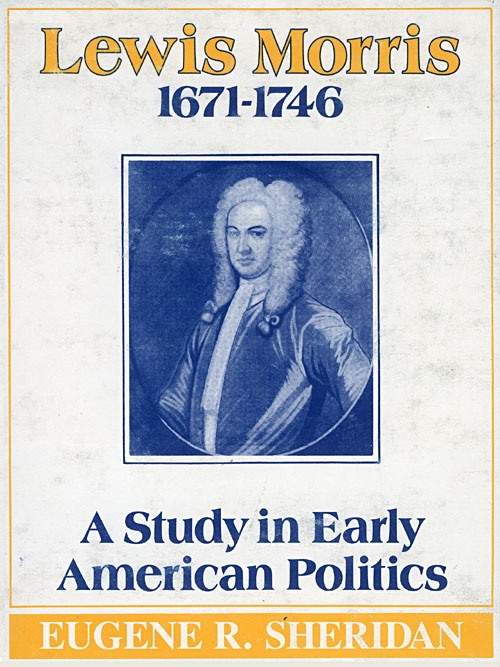
Lewis Morris (1671-1746), A Study in Early American Politics
Lewis Morris was born in New York City on October 15, 1671, the only child of Richard and Sarah Pole Morris, who had come to New York
from Barbados the year before...
...the father who begot him and the uncle who raised him to manhood came from a Welsh family which lived on an estate called Tintern
in Monmouthshire, England. Richard Morris, born in 1616, was "a man full of strength and vigor, inured to hardships," who had a pleasing prose style and a keen
interest in science. He fought on the side of Parliament during the English Civil War and attained the rank of captain in an infantry regiment.
After the establishment of the Commonwealth, he migrated to Barbados where he joined his older brother, Lewis Morris, Sr., a well-to-do sugar planter.
During his stay on Barbados, Richard married Sarah Pole, a aresident of the island, who shortly after her death was deeply mourned by a friend as
"a virtuous young woman in the prime of life," and who almost a century later was improbably described by one
of her grandsons as a "Daughter to the Lt of the Tower" of London. In the late 1660's he made several trips to New York, acting as a factor for his
brother and seeking a new home for them. Richard and Sarah finally settled permanently in New York in 1670 when he purchased for himself and
his brother a 520-acre tract of land in what is now the southern part of Bronx County that became the nucleus of the family estate in this colony.
Richard worked as a merchant and attorney in New York until death suddently struck down him and his wife in the summer of 1672, leaving their
"lovely, healthy child" Lewis, who was still less than a year old, in the hands of some guardians appointed by the provincial government. Young
Lewis was not destined to grow up without the care of a family of his own, however, for when Lewis Morris, Sr., learned of the depths of his
brother and sister-in-law and their survival by, as a family friend quaintly informed him, "but one poor bloosom, of whom yet there may be great
hope," he decided to come to New York in order to bring up his nephew and take over the family estate.
...
After settling in New York, the elder Morris displayed a remarkable spirit of enterprise for a man his age. He worked as a merchant and a
landholder, engaging in trade with England and the West Indies and making a series of "good improvements" on his land. Not content with
merely developing the 520-acre tract he and his brother had acquired in partnership, he obtained a 1,400 acre addition to it from Governor Edward
Andros in 1676. He named the enlarged estate Morrisania, and it was this property for which his nephew gained manorial status more
than twenty years later.
Nor did Morris, Sr., restrict his interests to New York. In 1675 he and Cornelius Steenwyck, a New York merchant who was said to be the
second richest man in that colony, formed a partnership to own and operate the Tinton Iron Works in Shrewsbury, New Jersey. Tinton was one of
only about a dozen ironworks erected in seventeenth-century America, and of these it was the largest and most complex. The works themselves
were located on a 3,900-acre tract that Morris obtained from the proprietary government of East Jersey and named Tintern - which was soon corrupted to Tinton - Manor
in honor of his ancestral home in England. ... By enlarging and improving Morrisania in New York and acquiring Tinton in East Jersey, the
elder Morris laid the material foundations for young Lewis Morris' subseuent political career.
...
|
Timeline of Governor Lewis Morris
| | | 1646/7 |
Lewis Morris begins creation of plantation and mercantile empire in Barbados |
| 8 | Sep | 1664 |
New York surrendered by the Dutch to the English |
| | | 1664 |
Richard Nicolls becomes NY Governor |
| | | 1664 |
Monmouth Patent (New Jersey) issued |
| 9 | Jan | 1665 |
Richard Morris writes Description of a Comet |
| | | 1666 |
Richard runs a NYC branch of Lewis' mercantile empire |
| | | 1668 |
Francis Lovelace becomes NY Governor |
| | | 1668 |
Colonel Lewis Morris establishes Morrisania estate |
| 15 | Aug | 1670 |
Richard Morris and Sarah Pole marry in Barbados |
| 10 | Aug | 1671 |
Richard Morris and his brother, Colonel Lewis Morris, sign agreement that 2/3 of all real estate in the name of Richard Morris belongs to his brother, but that all property of either would be inherited by the other. |
| 15 | Oct | 1671 |
Lewis Morris born at Morrisania NY |
| | Mar | 1672 |
Captain Richard Morris and Sarah Pole die; baby put first with Uncle Walter Webley, the husband of Aunt Mary Morris |
| | | 1673 |
Isabella Graham born in Scotland |
| 30 | Jul | 1673 |
Dutch retake New York, and confiscate the property of Colonel Lewis Morris to support the occupation |
| | | 1673 |
Anthony Colve becomes NY Governor |
| | | 1673 |
Colonel Lewis Morris returns to New York, his request for guardianship of baby Lewis is rejected; John Lawrence, Stephanus van Cortlandt, and Walter Webley, Jr. named guardians. |
| | Mar | 1674 |
Walter Webley, Jr. and two others named guardians for 2 1/2 year old Lewis |
| 31 | Oct | 1674 |
New York handed back to the English |
| | | 1674 |
Edmund Andros becomes NY Governor |
| 31 | Oct | 1674 |
Sometime after this, Uncle Lewis Morris obtains guardianship of his young namesake |
| | late | 1674 |
Uncle Lewis Morris gets 1920 acres for Morrisania |
| 25 | Oct; | 1676 |
Uncle Lewis Morris receives 3540 acres in Monmouth County NJ, specified as the Manor of Tinton by Governor Carteret |
| | | 1683 |
Francis Nicholson becomes NY Governor |
| | Feb | 1683 |
Uncle Lewis Morris moves to New Jersey as head of East Jersey's Governor's Council |
| | | 1687 |
Sixteen year old Lewis Morris involved in the surveying of the East and West New Jersey border marking |
| | | 1688 |
Jacob Leisler becomes NY Governor |
| | | 1688/9 |
Almost 18, Lewis feels his aunt is turning his stern Quaker uncle against him, and the young man runs away to Jamaica |
| | | 1690 |
Uncle Lewis Morris learns where young Lewis is and sends ship to bring him home |
| | Feb | 1691 |
Young Lewis Morris returns to Morrisania |
| 12 | Feb | 1691 |
Uncle Lewis Morris makes his will, written out by a servant, William Bickley |
| 14 | Feb | 1691 |
Uncle Lewis Morris dies at Morrisania |
| 21 | Feb | 1691 |
Aunt Mary, who had been promoted from maid servant to wife in her husband's old age, dies at Morrisania |
| | | 1691 |
Henry Sloughter becomes NY Governor |
| | May | 1691 |
Lewis Morris successfully defends his inheritance against forged changes in his Uncle's will made by Bickley |
| | | 1691 |
Henry Sloughter dies, and Major Richard Ingoldsby becomes NY Governor |
| 15 | Oct | 1701 |
Lewis Morris turns 20 |
| 3 | Nov | 1691 |
Lewis Morris, 20, marries Isabella Graham, 18, the daughter of New York Attorney General James Graham |
| | | 1692 |
Benjamin Fletcher becomes NY Governor |
| | | 1692 |
Lewis Morris named Judge of the Court of COmmon Right of East Jersey and member of the Governor's Council |
| | May | 1697 |
Governor Fletcher approves Morris's petition to make Morrisania a Manor |
| | | 1700 |
Father-in-law James Graham dies at Morrisania, where he's been living |
| 15 | Oct | 1701 |
Lewis Morris turns 30 |
| | | 1701 |
John Nanfan becomes NY Governor |
| 16 | Apr | 1702 |
The surrender of New Jersey proprietors to Queen Anne, brought to England by Lewis Morris, is presented to the queen |
| | | 1702 |
Edward Hyde, Lord Cornbury becomes NY Governor |
| 14 | Aug | 1703 |
Lewis Morris named to Governor Cornbury's Council |
| | | 1704 |
Removed from Council; reinstated by queen; again removed |
| | | 1707 |
Elected to General Assembly |
| | | 1708 |
John, Lord Lovelace becomes NY Governor |
| | | 1708 |
Lewis Morris named to Governor Lovelace's Council |
| | | 1709 |
Richard Ingoldsby becomes NY Governor |
| | | 1709 |
Suspended from Governor Ingoldsby's Council |
| | | 1710 |
Gerardus Beekman becomes NY Governor |
| | | 1710 |
Robert Hunter becomes NY Governor |
| | | 1710 |
Named head of Governor Robert Hunter's Council |
| 15 | Oct | 1711 |
Lewis Morris turns 40 |
| | | 1714 |
Collaborated with Governor Robert Hunter on production of Hunter's play Androboros, the first play printed in America.
Represented by character Solemn. |
| | | 1719 |
Peter Schuyler becomes NY Governor |
| | | 1720 |
William Burnet becomes NY Governor |
| | | 1720 |
Named Chief Justice by Governor William Burnet |
| 15 | Oct | 1721 |
Lewis Morris turns 50 |
| | | 1723 |
Personal 3000 book library is only 500 books smaller than Harvard's library |
| | | 1728 |
John Montgomerie becomes NY Governor |
| | | 1730 |
Lewis Morris' son John takes over management of Tinton Manor |
| 1 | Jul | 1731 |
Lewis Morris governed New Jersey for one year, from death of Governor Montgomerie until Aug 1732 arrival of Governor Cosby |
| 15 | Oct | 1731 |
Lewis Morris turns 60 |
| | | 1731 |
Rip Van Dam becomes NY Governor |
| | | 1732 |
William Cosby becomes NY Governor |
| | Apr | 1733 |
Suspended as Chief Justice by Governor Cosby |
| | | 1733 |
As head of party opposing DeLanceys, elected to General Assembly from Westchester |
| | late | 1734 |
Returned to England to argue for removal of Governor Cosby, or strengthening of General Assembly |
| | | 1736 |
George Clarke becomes NY Governor |
| 7 | Oct | 1736 |
Arrived back in Morrisania NY; then continued on to New Jersey |
| | late | 1736 |
Rejected as member of Council because of his England trip |
| | | 1738 |
Lewis Morris appointed Governor of New Jersey |
| | sum | 1738 |
Takes up duties as Governor of New Jersey |
| 15 | Oct | 1741 |
Lewis Morris turns 70 |
| | | 1744 |
George Clinton becomes NY Governor |
| 25 | May | 1746 |
Lewis Morris dies, age 75, at Trent House NJ |
| 30 | Mar | 1752 |
Isabella Graham Morris dies, aged 78 |
Timeline Including Family Events
|
Will of Isabella Graham Morris
Abstracts of Wills Vol IV 1744-1753 Page 382
Page 94.--I, ISABELLA MORRIS, widow of His late Excellency, Lewis Morris, Esq., being of sound and perfect mind. "I order that my body be decently interred in the vault at Morrisania, near the remains of my deceased husband." All debts and funeral charges are to be paid. I leave to my daughter, Euphemia Norris, all that my lot of land in New York, adjoining to the lot where her late husband, Matthew Norris, built a house, and extending from the Broadway to New street; which lot was a part of my father's estate, and was conveyed by my deceased husband and myself to the said Matthew Norris. All the rest of my estate I leave to my daughters, Mary Pearse, Anne Anthill, Euphemia Norris, Arabella Graham, Margaret Morris, Elizabeth White; and to my grand children, Isabella Mary Van Horne, Euphemia Arabella Kearny, and Graham Kearny. Whereas my late son (in law), Richard Ashfield, by a will made many years before his death, devised his real estate to the four daughters he then had, and after he made his will my daughter Isabella bore him three children, and I am advised that all his real estate will fall to his three surviving elder children, Lewis, Mary, and Isabella Ashfield, and that his three younger children, Patience, Richard, and Pearce Ashfield, are excluded. Now, provided the three older children convey to the three young children equal shares, then I leave to the said 6 children 1/8 of all my estate. I make my sons, Lewis and Robert Hunter Morris, executors.
Dated August 9, 1746. Witnesses, John Coxe, John Frehoeck, D. Martin, Sarah Robinson.
Codicil. Whereas my negro woman called "Old Hannah," and the mullatto man "Harry," have been good and faithful servants to me and my late husband, they are to live with such of my children as they shall choose, and they are to be careful and kind to them.
Dated February 16, 1747. Witnesses, Isabella Graham, Sarah Robinson, P. Kearny. Proved, April 20, 1752.
See possible connection of Isabellla Morris's father, James Graham
to James Graham, Earl of Montrose
(Scroll down to GRAHAM)
The seal of the "Great Marquis" is in the possession of George Coventry referred to in the footnote on page first of this lineage. he describes it in a letter in this wise: "It has descended to me from my great grandfather, Augustine Graham, and was once the property of The Great Marquis himself. It was brought to America by James Graham, Attorney General, the first of his decendants who emigrated hither. The seal is of brass, the handle about four inches in length. The device upon it is a shield bearing the three roses of his title same as on the family arms, and that is surmounted by the coronet of a Marquis. The whole is surmounted by the emblem of some order to which he belonged. After the restoration of the Stuarts the title was raised to a dukedom, April 24, 1707, and all who bore that rank, it being higher, used a ducal coronet upon their seals, in lieu of that belonging to a Marquis. Thus in addition to family tradition, the testimony of the seal itself attests its genuineness."
James Graham, Marqwuis of Montrose
James Graham
John Graham + Isabella Affick
James Graham (b:1675-80, Scotland d:27 Jan 1700, Morrisania)
+ Unknown
Augustine Graham (1653-1718)
+ Jane Chriswell (-1719)
James Graham (1704-1767)
+ Arabella Morris (1708-1767), dau of Gov. Lewis Morris & James' half 1st cousin
+ Elizabeth Windebank (b: 22 Sep 1665, England d: 1701, NYC)
Isabella Graham (b: 03 Jun 1673 d: 30 Mar 1752)
+ Gov. Lewis Morris (1671-1746)
|
Personal Letters of Governor Lewis Morris
Political Letters of Governor Lewis Morris
|
Descendants of Richard Morris
	1  	Capt. Richard Morris	b: 1616 in Tintern, Wales	d: Jul 1672 in 1675   West Chester NY
..		+Sarah Pole	b: Bef. 1649 in Sarah (Cole) Morris	d: 1672 in New York
	2  	Governor Lewis Morris	b: 15 Oct 1671 in Morrisania, NY
                            d: 25 May 1746 Trenton NJ  (burial: Morrisania NY; St. Ann's)
....		+Isabella Graham	b: 03 Jun 1673 in Scotland	d: 30 Mar 1752 in New York
                          (burial: 2 APR 1752 Morrisania NY; St. Ann's)
...	3  	Mary Morris	b: 1695	d: 15 Jan 1745/46 in burial date
.......		+Captain Vincent Pearse	b: in of the Royal Navy
...	3  	Anne Morris	b: 03 Apr 1706 in Morrisania, Bronx, NY	d: Nov 1781
.......		+Edward Antill	b: 17 Jun 1701 in Piscatauqua, NJ	d: 15 Aug 1770
.....	4  	[15] Sarah Amille Antill	b: 18 Aug 1740 in Piscatauqua NJ
.........		+[14] Lt. Col. John Morris	b: in Shrewsbury NJ
........	5  	[16] Amelia Morris	b: Abt. 1775
........	5  	[17] Sarah "Sally" Morris	b: Abt. 1774
............		+[18] Drake Ludlow
........	5  	[19] John Morris	b: Abt. 1772
.....	4  	Colonel Edward Antill	b: 11 Apr 1742 in Piscataqua, N. J.
                                d: 21 May 1789 in St. John's, near Montreal, Canada
.........		+Marie-Charlotte Riverin	b: 29 May 1750 in Quebec	d: 03 Sep 1785 in NY
........	5  	Isabella Graham Antill	b: 04 May 1767 in Montreal
............		+William Hall	b: in of Staffordshire, England
..........	6  	William Hall, Jr.	b: 10 Sep 1788	d: 07 Apr 1850
..............		+Charlotte Loedel	b: 09 Nov 1788	d: 20 Aug 1841
.............	7  	Henry Edward Hall	b: 01 Jul 1815
.............	7  	Margaret Hall	b: 19 Mar 1817	d: Feb 1897
.............	7  	Charlotte Hall	b: 10 Jul 1819	d: 04 May 1877
.................		+Randolph Routh	b: 16 Apr 1820	d: 07 Apr 1897
.............	7  	Caroline Wilheimina Hall	b: 11 Mar 1821	d: 10 May 1843
.............	7  	Frances Henrietta Hall	b: 19 Jul 1825	d: 27 Feb 1890
..........	6  	Unknown Hall
..............		+David Stansfield
.............	7  	Charlotte Stansfield
.............	7  	Jane Stansfield	b: 14 May 1816	d: 21 Mar 1892
.................		+Unknown Francis
.............	7  	Margaret Stansfield
.............	7  	Georgiana Stansfield
.............	7  	George Stansfield
........	5  	Charlotte Antill	b: 02 Sep 1769 in Montreal	d: 08 Oct 1769
........	5  	Mary Antill	b: 18 Jan 1771 in Montreal	d: 24 Aug 1834 in Utica
............		+Colonel Gerrit G. Lansing	b: 11 Dec 1760 in Albany NY
                                            d: 27 May 1831 in Oriskany NY
..........	6  	Barent Bleecker Lansing	b: 17 Jan 1793 in Argyle, Washington  NY
                                        d: 03 Dec 1853 in Brooklyn buried Utica
..............		+Sarah Breese	b: 06 Dec 1795 in Saybrook CT
                                d: 16 Jun 1879 in Whitestown buried Utica NY
.............	7  	Henry Livingston Lansing	b: 15 Jan 1818 in Rome NY
                                            d: 30 Sep 1889 in Canandaigua NY
.................		+Catharine Olivia Gibson	b: 26 Feb 1818 in NYC
                                              d: 25 Oct 1897 in Canandaigua
.............	7  	Manette Antill Lansing	b: 17 Feb 1820 in ch:  Utica NY	d: 05 Nov 1888
.................		+Charles Walker Morse	b: 17 Mar 1823 in Saybrook CT
                                          d: 16 Apr 1887 in Old Saybrook CT
.............	7  	Captain Arthur Breese Lansing	b: 04 Aug 1815 in Utica NY
                                          d: 09 Feb 1880 in NYC   West Point
.................		+Louise Cochran Lovett		d: in No issue
.............		*2nd Wife of Captain Arthur Breese Lansing:
.................		+Janet Suffern	b: 12 Jun 1825 in of NYC	d: 13 Oct 1904
.............	7  	General Henry Seymour Lansing	b: 17 Feb 1823
                                                d: 14 Apr 1882 in Burlington NJ
.................		+Jane Amelia White	b: 02 Sep 1825 in Onondaga NY
                                        d: 29 Nov 1904 in Trenton NJ
.............	7  	Barent Bleeker Lansing	b: 1837 d: 04 Oct 1887 in 3 OCT 1887
.................		+Sophie E. Williams	b: 1836 in of Buffalo	d: 23 Mar 1901
..........	6  	Judge Richard Ray Lansing	b: 07 Jul 1789 in Albany NY
                                          d: 29 Sep 1855 in Detroit
..............		+Susanna Platt	b: 27 Nov 1793 in Whitesboro NY
                                  d: 14 Dec 1843 in Bristol Indiana
..........		*2nd Wife of Judge Richard Ray Lansing:
..............		+Elizabeth Davenport Livingston	b: 17 Mar 1805 in Poughkeepsie NY
                                                  d: 21 Mar 1886 in Michigan
.............	7  	Edward Antill Lansing	b: May 1814 in Jul 1814 Utica NY
                                        d: 12 Jun 1868 in Detroit
.................		+Mary	b: Abt. 1819	d: 14 Dec 1843 in Bristol Indiana  aged 24
.............		*2nd Wife of Edward Antill Lansing:
.................		+Ann Christina DeQuindre
.............	7  	Jonas Platt Lansing	b: 01 Jan 1816 in Utica NY
                                      d: 03 Jul 1843 in Sisal, Yucatan
.............	7  	Manette Lansing	b: 12 Dec 1817 in Utica NY
                                  d: 03 Sep 1904
.................		+Bayard Boyd	b: 10 Jan 1815	d: 26 Aug 1875
.............	7  	Gerrit G. Lansing	b: 11 Jun 1820 in NY
                                    d: 13 Oct 1852 in Per Platt Family Book
.................		+Mary Rebecca Judson	b: 05 May 1824 in Missouri
.............	7  	Helen Platt Lansing	b: 28 Mar 1822	d: 10 Nov 1860 in Detroit
.................		+Judge Sylvester Larned	b: 23 Sep 1820 in of Detroit	d: 25 Nov 1893
.............	7  	Charlotte Mills Lansing	b: 19 Sep 1826	d: 08 Jul 1892 in Albany NY
.................		+Elias Willard Smith	b: 04 Oct 1816	d: 24 May 1886
.............	7  	Richard Lansing	b: 29 Apr 1824	d: 11 Jan 1826 Died in infancy
.............	7  	Frances Tappan Lansing	b: 06 Dec 1830	d: 28 Nov 1841
.............	7  	Cornelia Platt Lansing	b: 26 Sep 1832	d: 29 Nov 1841 Died in infancy
.............	7  	Melancthon Woolsey Lansing	b: 28 Sep 1834 in Utica	d: Bef. 1868
.................		+Mary Jane Abbott	b: 06 Jul 1837
.............	7  	Phillipina S. Lansing	b: 27 Aug 1836	d: 07 Aug 1886
.............	7  	Susan L. Lansing	b: 20 Mar 1839
.................		+Selah Vanduzer Reeve	b: 1835	d: 1904
.............	7  	Richard Lansing	b: 28 Oct 1828	d: 19 May 1831 Died in infancy
..........	6  	Edward Antill Lansing	b: 10 Jul 1797 in bap: Saratoga Reformed Dutch Protestant Ch
..........	6  	Charlotte H. Lansing	b: Abt. 1797 in Ch; 4 June 1788  Dutch Reformed Ch Schaghticoke
..............		+Reverend Samuel Thomas Mills	b: in Litchfield Twp, Herkimer, New Yor
.............	7  	Unknown Mills	b: Abt. 1815 in Litchfield Twp, Herkimer, New York
.............	7  	Unknown Mills	b: Abt. 1817 in Onondaga, Onondaga, New York
.............	7  	Samuel Mills	b: 08 Nov 1818 in Bap: Utica, Oneida, New York
.............	7  	Arthur Tappan Mills	b: Abt. 1822 in Moscow, Livingston, New York
.............	7  	John Mills	b: Abt. 1824 in Moscow, Livingston, New York
.............	7  	Minette Mills	b: Abt. 1826 in Smithfield, Madison, New York
.............	7  	Elizabeth Mills	b: Abt. 1829 in Smithfield, Madison, New York
........	5  	Julia Antill	b: 28 Mar 1772 in Montreal	d: 19 Dec 1787 in Quebec
........	5  	Edward Antill	b: 04 May 1775 in Montreal	d: 1776 in Montreal
........	5  	Amelia Antill	b: 15 May 1777 in Lancaster, Pennsylvania	d: Dec 1777
........	5  	John Antill	b: 15 Dec 1779 in Flatbush, Long Island	d: Oct 1781
........	5  	Henrietta Antill	b: 12 Sep 1780 in Bushwick, Long Island
............		+Dr. Charles Blake		d: 1810
..........	6  	Anna Blake
..........	6  	Edward Blake
..........	6  	John Blake
..........	6  	Antill Blake
........		*2nd Husband of Henrietta Antill:
............		+Bernard A. Panet
..........	6  	Henrietta Panet	b: 1823
..............		+Capt. George B. Shakespear
.............	7  	Harriet Blanche Shakespear	b: 15 Jun 1846
.................		+Maj. Gen. J. E. Mayne
.............	7  	Rosaline Louisa Shakespear	b: 13 Jul 1847e
.................		+Surg. Gen. W. Sim Murry
.............	7  	Amy Sophia Shakespear	b: 08 Oct 1848
.................		+Maj. Brydges Robinson Bramfill
.............	7  	Lt. Col. Arthur Bucknall Shakespear	b: 14 Dec 1849
.................		+Edith D. O. Atkinson
.............	7  	Capt. William Powlett Shakespear	b: 18 Jun 1851
.................		+Amy Isabel Booker
.............	7  	Louisa Arabella Shakespear	b: 12 Sep 1852
.................		+Col. William Randolph Routh	b: 30 Nov 1849
.............	7  	Caroline Isabella Shakespear	b: 17 Nov 1856
.................		+Col. John Younger
.............	7  	Grace Alice Shakespear	b: 18 Mar 1858
.................		+Col. Thomas Viret Shepherd
.............	7  	John Young Shakespear	b: 02 Jun 1859	d: 01 Mar 1879
.................		+M. Shuttleworth
.............	7  	Noel George Shakespear	b: 11 May 1862
.................		+Dora Shakespear
.............	7  	Edward Bucknell Shakespear	b: 17 May 1864
.................		+Margaret Georgiana Mulliken
.............	7  	Mary Maud Shakespear
.................		+Capt. Daniel Fitzgerald Downing
.............	7  	Comdr. Hastings Frank Shakespear	b: 27 Mar 1868
.................		+Darcy Anderson
........	5  	Louisa Antill	b: 02 Dec 1782 in Colden Ham, Orange County	d: Jun 1783
........	5  	Frances Antill	b: 04 May 1785 in Brookland Heights Long Island NY
                              d: 21 Jul 1863 in New Haven CT
............		+Arthur Tappan	b: 22 May 1786 in Northampton, Mass	d: 23 Jul 1865
..........	6  	Benjamin Edward Antill Tappan	b: 03 Aug 1813	d: 26 Nov 1862
..............		+Lucy R. Reed	b: in of Boston MA
.............	7  	James Reed Tappan	b: 1837	d: Apr 1845
.............	7  	Edward Antill Tappan	b: 1839	d: Apr 1845
..........		*2nd Wife of Benjamin Edward Antill Tappan:
..............		+Rachel Bromby Staines	b: 1825 in Brombly?	d: 1899
.............	7  	Frances Antill Tappan	b: 05 Sep 1854
.................		+James McMahon Fox	b: in of Milwaukee MI
.............	7  	Janet Macindoe Tappan	b: 18 Jan 1858 in Mc Indoe
.................		+Stephen Strong Gregory	b: in of Madison WI
.............	7  	Theodora Antill Tappan	b: 15 Jun 1860
.................		+James Reeve Stuart
.............	7  	Arthur Tappan	b: 27 Aug 1853	d: 22 Jul 1854
.............	7  	Mary Bleecker Lansing Tappan	b: 07 Apr 1856	d: 31 Aug 1859
..........	6  	Katherine Colt Tappan	b: 29 May 1827 in lived Coalburgh WVa   Coit
                                      d: 15 Aug 1901 in Coalburgh WV
..............		+William Henry Edwards	b: 15 Mar 1822 in Hunter, N. Y.
.............	7  	William Seymour Edwards	b: 14 Sep 1856 in NY
.............	7  	Edith Katharine Antill Edwards	b: 22 Sep 1852 in London England
                                                  d: in resides Oviedo FL
.................		+Theodore Luqueer Mead	b: in of NY
.............	7  	Anne Scott Edwards	b: 25 Feb 1858 in NY	d: in resides Coalburgh WVa
.................		+Webster D. Smith	b: in of Biddeford ME
..........	6  	Charlotte Lansing Tappan	b: 04 Feb 1812	d: 22 Jan 1892
..............		+Rev. William Beale Lewis	b: 29 Jul 1812 of Brooklyn NY	d: 27 Dec 1849
.............	7  	William Lewis	b: 26 Dec 1835	d: 26 Dec 1835
.............	7  	Dr. William Beale Lewis, 2nd	b: 12 May 1842
.................		+Rebecca Matilda Edwards
.............	7  	Frances Antill Lewis	b: 15 Feb 1837	d: 10 Jul 1901
.................		+Alexander J. Walker		d: 25 Jun 1872
.............	7  	William Arthur Lewis	b: 22 Feb 1839	d: 05 Nov 1841
.............	7  	Theodore Mason Lewis	b: 09 Aug 1843	d: 23 May 1860
.............	7  	Charlotte Sophia Lewis	b: 09 Oct 1844	d: 24 Aug 1845
.............	7  	Elizabeth Wilson Lewis	b: 28 Oct 1849
.................		+Rev. Thornton MacNess Niven, Jr.	b: in of Dobbs Ferry NY
..........	6  	Frances Antill Tappan	b: 20 Dec 1815	d: 05 Sep 1860
..............		+John Forman Seymour	b: 21 Sep 1814 in of Utica NY	d: 22 Feb 1890
.............	7  	Frances Antill Seymour	b: 1840	d: 18 Aug 1853
.............	7  	Horatio Seymour	b: 06 Jan 1844	d: in resides Marquette WI
.................		+Abigail Adams Johnson	b: 23 Nov 1855
.............	7  	Mary Ledyard Seymour	b: 11 Sep 1847
.................		+Dr. Willis E. Ford	b: in of Utica NY
..........	6  	Sarah Salisbury Tappan	b: 19 Feb 1819	d: 18 Oct 1895
..........	6  	Elizabeth Riverin Tappan	b: 08 Apr 1821	d: 24 Mar 1903
..............		+John Penny Marvin	b: 06 Nov 1819	d: 14 Aug 1849
.............	7  	Arthur Tappan Marvin	b: 19 Feb 1846	d: 17 Jul 1902 in resides CA
.................		+Mary Barney
.............	7  	Charles Steadman Marvin	b: 22 Oct 1848 in 18 MAY 1847	d: 10 Aug 1849
.............	7  	Frances Antill Marvin	b: Oct 1848
.................		+Rev. Zachery Eddy	b: 19 Dec 1815 in of Detroit MI	d: 15 Nov 1891
..........	6  	Arthur Tappan, Jr.	b: 01 Sep 1825	d: 08 Aug 1826
..........	6  	Maryan Lansing Tappan	b: 24 Oct 1823	d: 06 Jul 1831
........	5  	Euphemia Antill	b: 05 Jul 1773	d: 19 Jul 1773
.....	4  	Isabel Graham Antill	b: Abt. 1741 in or 1748 Piscataqua, Middlesex, New Jersey
.........		+Unknown McNeil
.....		*2nd Husband of Isabel Graham Antill:
.........		+Reverend Robert McKean	b: 13 Jul 1732 in N.S.
                                    d: 17 Oct 1767 in Raritan Landing NJ
.....	4  	Major John Antill	b: 1744 in Piscataqua NJ	d: 1816 in Canada
.........		+Jane Colden
........	5  	Edward Antill
........	5  	Alexander Colden Antill
.....		*2nd Wife of Major John Antill:
.........		+Margaret Colden	b: in of Coldenham, Duchess, NY
........	5  	Major John Collins Antill	b: Abt. 1768 in New Brunswick NJ
                                        d: Abt. 1837 in Ceylon
............		+Unknown		d: 1783 in Canada
..........	6  	child1 Antill
..........	6  	child2 Antill
..........	6  	child3 Antill
........	5  	Henry Colden Antill	b: 01 May 1779 in New Brunswick NJ
                                  d: 14 Aug 1852 in Jarvisfield, Picton, NSW
............		+Eliza Wills	b: 10 Sep 1802	d: 30 Sep 1858 in St Leonards. NSW
..........	6  	Henry Colden Antill, Jr.	b: 07 Apr 1826 in 'Jarvisfield', Picton, NSW
                                          d: 17 Mar 1913 in Parramatta
..............		+Teresa Hatch	b: 05 Jan 1835 in Hobart Town	d: 19 Sep 1882 in Queanbeyan
.............	7  	Henry Colden Antill III	b: 14 Jun 1854 in Picton, NSW
                                          d: 19 Dec 1932 in Picton,NSW
.................		+Jane Anne Brown
.............	7  	Alice Eliza Antill	b: 26 Jul 1852 in Picton, NSW
.............	7  	Eveline (twin) Antill	b: 16 Jan 1857 in Picton, NSW
.............	7  	Mary (twin) Antill	b: 16 Jan 1857 in Picton, NSW
..........	6  	Margaret Campbell Antill	b: 27 Jun 1820 in Sydney, NSW
                                          d: 22 Jul 1849 in Picton, NSW
..........	6  	John Macquarie Antill	b: 31 May 1822 in 'Moorebank' NSW
                                      d: 04 Jun 1900 in Sydney,NSW
..............		+Jessie Hassall Campbell	b: 26 Mar 1834 in Anne's Vale, NSW
                                            d: 07 Feb 1917
.............	7  	Major General John Macquarie Antill	b: 26 Jan 1866
                                   in Jarvisfield, Picton, New South Wales	d: 01 Mar 1937
.................		+Agnes Marion Willsallen
.............	7  	Margaret Campbell Antill	b: 04 Jul 1852 in Picton, NSW
.............	7  	Jessie Macquarie Antill	b: Abt. 1853 in Picton, NSW
.............	7  	Celia Farrington Antill	b: 22 Feb 1855	d: as an infant
.............	7  	John Macquarie Antill	b: 09 Jun 1857 in Picton, NSW
.............	7  	Robert Henry Antill	b: 31 May 1859 in Picton, NSW
.............	7  	Celia Farrington (2) Antill	b: 13 Oct 1861 in Picton, NSW
.............	7  	Selina Johnston Antill	b: 09 Oct 1863 in Picton, NSW
.............	7  	Captain Edward Augustus Antill	b: 04 Dec 1867 in Picton, NSW
.................		+L. M. Christian
.............	7  	Guy Forrest Antill	b: 04 Nov 1869 in Picton, NSW
.............	7  	Elizabeth Anne Antill	b: 30 Jul 1871 in Picton, NSW
.................		+Col. H. B. Lansetter, C. B.
..........	6  	Alice Sophia Antill	b: 27 Mar 1824 in 'Moorebank' NSW
..............		+Henry Moggridge
.............	7  	Major John Antill Moggridge
.............	7  	M Moggridge
.................		+Lieut. Keppel Foote, R. N.
..........	6  	William Redfern Antill	b: 03 Jan 1828 in 'Jarvisfiled', Picton, NSW
                                        d: 05 Sep 1905
..............		+Mary Susan Bell
.............	7  	Amy Mary Antill	b: 1866 in Picton, NSW
.............	7  	Estelle Emma Voss Antill	b: 1877 in Picton, NSW
.............	7  	Florence Augusta Antill	b: 1873
.............	7  	Frances Antill	b: 07 Jul 1863
.............	7  	Francis William Antill	b: 07 Jul 1862
.............	7  	Georgina E. Antill	b: 13 Nov 1864
.............	7  	Grace Isabel Antill	b: 1871
.............	7  	Sarah Georgina Antill	b: 1875
.............	7  	William Redfern Antill	b: 18 Apr 1879
..........	6  	Thomas Wills Antill	b: 20 Nov 1830 in 'Jarvisfield',Picton, NSW
                                    d: 11 May 1865 in Nelson NZ
..............		+Sarah M. McKee
.............	7  	Maria Antill	b: 20 Feb 1852 in Picton, NSW
..........		*2nd Wife of Thomas Wills Antill:
..............		+Isabella Fisher
.............	7  	Henry Antill	b: 23 May 1855
.............	7  	Fanny Jessie Antill	b: 27 Aug 1857
.............	7  	Charlotte Antill	b: 01 Jul 1860
.............	7  	Mary Emily Antill	b: 10 Jun 1863
..........	6  	Edward Spencer Antill	b: 20 Jul 1832 in Picton, NSW
..............		+Mary Campbell
..........	6  	James Alexander Antill	b: 07 Nov 1834 in Picton, NSW
                                        d: 15 Feb 1920
..............		+E.C. Poynton
.............	7  	Henry Colden Antill	b: Abt. 1858
.............	7  	Isabella Jessie Antill
..........		*2nd Wife of James Alexander Antill:
..............		+Susanna Caroline Wild
.............	7  	Alick Edward Antill	b: 08 Dec 1877
.............	7  	Emmeline Nelly Antill	b: 12 Aug 1874
.............	7  	James Alexander Antill
.................		+Florence Mary Wauch
.............	7  	Loftus Cliff Antill	b: 23 Sep 1876
.............	7  	Robert Arthur Antill	b: 26 Aug 1881
.............	7  	Ada Antill
.............	7  	Alice Eliza Antill
.............	7  	Theodora Dora Antill
.............	7  	Eileen Antill
.............	7  	Loftus Cliff (2) Antill	b: 18 Apr 1879
..........	6  	Selina Antill	b: 17 Oct 1837 in Picton, NSW	d: 01 Dec 1924
..............		+Robert Francis Pockley
.............	7  	Robert Fulcher Pockley	b: 24 May 1855
.............	7  	Francis Antill Pockley	b: 28 Apr 1857
.............	7  	Arthur Bingham Pockley	b: 10 May 1859
.............	7  	Alice Isabella Pockley	b: 08 Jun 1861
.............	7  	Harold Richardson Pockley	b: 27 Sep 1863
.............	7  	Florence Augusta Pockley	b: 02 Jan 1866
.............	7  	Ethel Ernestine Pockley	b: 12 Mar 1868
.............	7  	Norman Vanderbyl Pockley	b: 23 Nov 1869
.............	7  	Kathleen Mabel Pockley	b: 14 Mar 1872
.............	7  	Eustice Mitford (twin) Pockley	b: 11 Oct 1873
.............	7  	Edith Muriel (twin) Pockley	b: 11 Oct 1873
.............	7  	Harold Campbell Pockley	b: 19 Nov 1874
.............	7  	Eric Osbaldeston Pockley	b: 19 May 1876
.............	7  	Enid Marguerite Pockley	b: 10 May 1879
.............	7  	Helen Marjorie Pockley	b: 28 Mar 1882
........	5  	Eliza Hope Antill	b: Abt. 1781 in New Brunswick NJ
............		+Cadwallader Colden
..........	6  	Thomas Colden
..........	6  	Margaret Colden
..............		+J Trimble
.....	4  	Dr. Lewis Antill	b: 10 Dec 1746 in Piscataqua NJ
                            d: 11 Sep 1777 in At sea
.........		+Alice Colden	b: 22 Feb 1744/45	d: Abt. 1776
........	5  	Elizabeth Colden Antill	b: 09 May 1774 in Of, Newburgh NY	d: 03 Jun 1835
............		+Rev. Frederick Van Horne	b: Abt. 1768	d: 31 May 1835 in Poughkeepsie, NY
........	5  	Alice Antill	b: 17 Jan 1776	d: 25 Jun 1870
............		+William Davies	b: 21 Mar 1763 in New Milford, CT	d: 07 Feb 1857
........	5  	Edward Antill	b: 01 Jan 1772
.....	4  	Mary Antill	b: Abt. 1743 in Piscataqua, Middlesex, New Jersey
.........		+Richard Cochran	b: 1739 in Of Middlesex Co., New Jersey
........	5  	Anne Cochran
...	3  	Colonel Lewis Morris	b: 25 Sep 1698 Trenton NJ
                              d: 03 Jul 1762 in Morrisania, Bronx, NY  (burial: St. Ann's)
.......		+Katrintje (Tryntie) Staats	b: 04 Apr 1697 in NYC
                              d: 11 Mar 1730/31 in Morrisania, Bronx, NY
.....	4  	Mary Morris	b: 01 Nov 1724 in New York	d: 24 May 1805
.........		+Thomas Lawrence	b: 16 Apr 1720 in Philadelphia, PA	d: 22 Jan 1775
........	5  	[2] Thomas Lawrence	b: 06 Oct 1745 in Philadelphia, PA
............		+Rebecca Bond
........		*2nd Wife of [2] Thomas Lawrence:
............		+[3] Mary Morris	b: 1752 in Morrisania NY	d: Jul 1776
........		*3rd Wife of [2] Thomas Lawrence:
............		+[1] Catharine Morris	b: 04 Mar 1749/50 in Morrisania NY	d: 22 Nov 1834
........	5  	Katherine Lawrence	b: 06 Feb 1743/44
........	5  	Rachel Lawrence	b: 30 Oct 1747 in West Chester New York
........	5  	Lewis Lawrence	b: 1749
........	5  	John Lawrence	b: 15 Sep 1751
........	5  	Staats Lawrence	b: 1753
........	5  	Robert Hunter Lawrence	b: 1754
........	5  	William Lawrence	b: 22 Sep 1755
........	5  	Morris Lawrence	b: 1757
........	5  	Staats (2) Lawrence	b: 1760
........	5  	Richard Lawrence	b: 1763
........	5  	Mary Lawrence	b: 05 Nov 1765
........	5  	Thomas John Lawrence	b: 04 Jul 1776
.....	4  	General Lewis Morris, the Signer	b: 08 Apr 1726 in Morrisania NY
                                            d: 22 Jan 1798 in Morrisania NY
.........		+Mary Walton	b: 14 May 1727 in New York
                          d: 11 Mar 1794 in Morrisania, NY
........	5  	[1] Catharine Morris	b: 04 Mar 1749/50 in Morrisania NY
                                    d: 22 Nov 1834
............		+[2] Thomas Lawrence	b: 06 Oct 1745 in Philadelphia, PA
........	5  	[3] Mary Morris	b: 1752 in Morrisania, Bronx County, New York	d: Jul 1776
............		+[2] Thomas Lawrence	b: 06 Oct 1745 in Philadelphia, PA
........	5  	Colonel Lewis Morris IV	b: 1754 in Morrisania, Bronx County, New York
                                      d: 22 Nov 1824 in Morrisania NY  (buried: St. Ann's)
............		+Ann B. Elliot
..........	6  	Col Lewis Morris V	b: 10 Mar 1785
..............		+Elizabeth Manigault	b: 06 Jul 1786	d: 27 Sep 1822
.............	7  	Gabriella Manigault Morris	b: 06 Jun 1808	d: 07 Sep 1871
.................		+John Butler	b: 20 Jan 1806	d: 23 Dec 1847
.............	7  	Margaret Ann Morris	b: 11 May 1810	d: 20 Aug 1881
.................		+John Berkley Grimball
.............	7  	Lewis Morris	b: 07 Jul 1812	d: 22 Sep 1822
.............	7  	Ralph Morris	b: 08 May 1814	d: 20 Apr 1860
.............	7  	Harry Manigault Morris	b: 24 Nov 1817	d: 29 Jan 1892
.................		+Georgie Edwards
.............	7  	Richard Lewis Morris	b: 09 Oct 1818	d: 15 Oct 1885
.................		+Sarah Brailsford		d: 24 Dec 1856
.............		*2nd Wife of Richard Lewis Morris:
.................		+Annie Elizabeth Dunwoody	b: 02 Dec 1853
.............	7  	Captain Charles Morris	b: 07 May 1820	d: 22 Mar 1895
.................		+Hannah Troupe
.............		*2nd Wife of Captain Charles Morris:
.................		+Clementina McAllister
.............	7  	Charlotte Morris	b: 03 Feb 1821	d: 12 Jan 1902
.................		+Harry Manigault	b: 1819	d: 30 Nov 1869
..........		*2nd Wife of Col Lewis Morris V:
..............		+Amarinthia Lowndes	b: 1803	d: 1843
.............	7  	Elizabeth Morris	b: 03 Dec 1838	d: 25 Jul 1849
.............	7  	Lewis Morris	b: 18 Apr 1842
.................		+Carrie Ostenheim
..........	6  	[5] Sabina Morris	b: 23 Aug 1789 in Of Morrisania, New York
..............		+[4] Robert Walter Rutherford	b: 1788	d: 1851
.............	7  	[6] John Rutherford	b: 1810	d: 1871
.................		+[7] Charlotte Livingston	b: 1825	d: 1894
..........	6  	Mary Walton Morris	b: 27 Jul 1791	d: 07 Mar 1857
..............		+General W. Clifford Wayne
..........	6  	Jacob Morris
..............		+Cecile
..........		*2nd Wife of Jacob Morris:
..............		+Caroline de Vander Horst
..........	6  	Ann Morris	b: 16 Apr 1795	d: 03 Dec 1879
..............		+Elias Vander Holst
..........	6  	Richard Rutherford Morris	b: 20 Aug 1798	d: 02 Jun 1866
..............		+Helen V. C. Morris	b: 20 Dec 1801	d: 26 Apr 1852
..........	6  	George Washington Morris	b: Bet. 1790 - 1799	d: 22 Aug 1834
..............		+Maria Evans Whaley	b: 14 Dec 1812	d: 24 Nov 1869
.............	7  	Sabina Morris	b: 1833 in Of Westchester Co NY
..........	6  	Captain William Elliott Morris
..............		+Anna Fishburne
........	5  	General Jacob Morris	b: 28 Dec 1755 in Morrisania NY
                                    d: 10 Jan 1844 in Morris, Ostego, NY
............		+Sophia Pringle
........		*2nd Wife of General Jacob Morris:
............		+Mary Cox	b: Abt. 1757 in NYC
..........	6  	Lewis Lee Cox Morris	b: 1778	d: 1853
..............		+Elizabeth Ann Gilbert
.............	7  	Lewis Lee Morris II	b: 1806	d: 1883
.................		+Julia A. Collier
.............	7  	Jacob Morris	b: 1819
.................		+Sarah Tompkins
.............	7  	William Augustus Morris	b: 1820	d: 1894
.................		+Jane Elizabeth Morris
.............	7  	John Cox Morris	b: 1822	d: 1882
.................		+Sibylla T. Carmalt
.............	7  	Robert Hunter Morris	b: 1826	d: 1865
.................		+Martha Elizabeth Wright
.............	7  	James Rutherford Morris	b: 1827	d: 1903
.................		+Elizabeth E. Howe
.............	7  	Charles Lee Morris
..........		*2nd Wife of Lewis Lee Cox Morris:
..............		+Hannah Winter
..........	6  	John Cox Morris
..........	6  	Richard Valentine Morris	b: 18 Sep 1782 in Philadelphia, PA
                                          d: 02 Feb 1865 in Upton Park, NY
..............		+Frances Mary Upton
.............	7  	David Johnston Morris	b: 25 Nov 1818
                                        d: 22 Feb 1835 in Morris NY
.............	7  	Adelaide M. A.Morris	b: 27 Apr 1821 in Morris, Ostego, NY
                                        d: 07 Jul 1889 in Morris, Ostego, NY
.............	7  	Frances Mary UptonMorris	b: 27 Apr 1821	d: 1898 in Morris, Ostego, NY
.............	7  	Euphemia Morris
..........	6  	Mary Ann Morris	b: 27 Aug 1784 in Philadelphia, PA	d: 27 Oct 1872
..............		+Isaac Cooper
..........		*2nd Husband of Mary Ann Morris:
..............		+Isaac Cooper
..........	6  	George Morris	b: 17 Dec 1786 in Philadelphia, PA
                              d: 19 Dec 1787 in Philadelphia, PA
..........	6  	Sarah Sabrina Morris	b: 21 Aug 1788 in Philadelphia, PA
                              d: 24 Oct 1878
..............		+Peter Philip James Kean	b: 27 Feb 1788 in Elizabethtown NJ
                                            d: 02 Oct 1828 in New Lebanon, NY
.............	7  	Julia Ursin Nieemcewicz Kean	b: 1816 in Ursino, New Jersey
                                                d: 30 Jun 1887 in NYC
.................		+Governor Hamilton Fish	b: 03 Aug 1808	d: 07 Sep 1893
..........	6  	Censa Morris	b: Jan 1791 in Morris, Ostego, NY
                              d: 02 Jul 1791 in Morris, Ostego, NY
..........	6  	Jacob Walton Morris	b: 18 Nov 1792 in Morris NY
                                    d: 10 Aug 1855 in Morris, NY
..............		+Serena L. Burgess	b: 01 Dec 1798	d: 31 Oct 1884
.............	7  	Charles Valentine Morris	b: 10 Apr 1826 in Morris NY
                                            d: 04 Feb 1917 in Morris NY)
.................		+Mary Jane Rose
.............	7  	John Cox Morris	b: Abt. 1840	d: 27 Apr 1884 in Morris NY
.............	7  	Peter Kean Morris	b: in Morris, Ostego, NY
.............	7  	Hannah Morris	b: in Morris, Ostego, NY
.............	7  	Jane Morris	b: in Morris, Ostego, NY
..........	6  	Catharine Cox Morris	b: 18 Feb 1795 in Morris NY
                                      d: 28 Jun 1818 in Morris NY
..............		+John Holmes Prentiss	b: 17 Apr 1783 in Cooperstown NY	d: 26 Jun 1861
..........	6  	William Augustus Pringle Morris	b: 23 Oct 1796 in Morris, Ostego, NY
                                                d: in 11 Jan 1820 Morris, Ostego NY
..............		+Harriet Granniss
.............	7  	Howard Morris	b: 06 Oct 1856 in Otsego, New York
.................		+Julia A. Robertson
.............	7  	Arthur Breese Morris	b: 1858
.................		+Ida L. Moore
.............	7  	Charles Marclus Morris	b: 1865
.................		+Mary Fairchild
..........	6  	James Elliot Morris	b: 02 Aug 1800 in Morris NY
                                    d: 19 Apr 1802 in Morris NY
..........	6  	Charles Valentine Morris	b: 04 Mar 1802 in Morris NY
                                    d: 11 Apr 1887
..............		+Eliza Mosley
.............	7  	Rev. Elizur Morris	b: 1835
.................		+Mary E. Scott
........	5  	James Morris	b: 1766 in 1764	d: 1814 in 1827
............		+Helena Van Cortlandt	b: 04 Jan 1768 in Albany NY
..........	6  	Frederick Augustus Morris	b: 1797 in Changed name to Van Cortlandt??	d: 1859
..............		+Harriet Munro
..........		*2nd Wife of Frederick Augustus Morris:
..............		+Jane Catherine Maitland
..........	6  	Dr. Richard Lewis Morris	b: 1805	d: 1880
..............		+Elizabeth Sarah Fish
.............	7  	Major Richard Lewis Morris	b: 1840	d: 1882
.................		+Lilian Monson
.............	7  	Stuyvesant Fish Morris	b: 03 Aug 1843
.................		+Ellen James Van Buren	b: 1843 in Kinderhook , Columbia, New York
..........	6  	Robert R. Morris	b: 1807	d: 1881
..............		+Harriet Edgar
..........	6  	William H. Morris	b: 1810	d: 1896
..............		+Hannah Cornell Newbold
.............	7  	Augustus Newbold Morris	b: 1838
.................		+Eleanor Colford Jones
..........		*2nd Wife of William H. Morris:
..............		+Caroline Halsted
..........		*3rd Wife of William H. Morris:
..............		+Ella Birckhead
........	5  	Richard Valentine Morris	b: 08 Mar 1768 in Morrisania NY
                                        d: 13 May 1815 in "Morrisania", New Jersey
............		+Anne Walton	b: 24 Jan 1773	d: 18 Apr 1858
..........	6  	Gerard Morris	b: 1799	d: 1865
..............		+Martha Pine
..........	6  	Henry Morris	b: 1806
..............		+Mary N. Spencer
.............	7  	Henry Lewis Morris	b: 1845
.................		+Anna Rutherfurd Russell
........	5  	Lt. William Walton Morris	b: 1760	d: 1832
............		+Susanna Carpender
..........	6  	Lewis Morris
..............		+Mary	b: in Morris Book:  Julia Hayes-Savage
.............	7  	Susanna Morris
.................		+Joseph M. Demmon
.............	7  	Lewis Morris
..........	6  	General William Walton Morris	b: 1802	d: 1865
..............		+Mary Alexander Ritchie
.............	7  	Major William Gouverneur Morris	b: 1833	d: 1892
.................		+Helen L. Carnes
.............	7  	Major Arthur Morris	b: 1843	d: 1892
.................		+Adelaide Bettner
........	5  	Helena Magdalena Morris	b: 1762 in Morrisania , Westchester, NY
                                      d: 06 Oct 1840 in Edgerton, Bergen, NJ
............		+John Rutherford	b: 1760 in New Jersey	d: 1840
..........	6  	[4] Robert Walter Rutherford	b: 1788	d: 1851
..............		+[5] Sabina Morris	b: 23 Aug 1789 in Of Morrisania, New York
.............	7  	[6] John Rutherford	b: 1810	d: 1871
.................		+[7] Charlotte Livingston	b: 1825	d: 1894
........	5  	Staats Morris	b: 1765 in "Morrisania", New Jersey
                            d: 23 Oct 1826 in Saratoga, New York
............		+Everado Catherine Sophia Van Braem
..........	6  	Lewis Nelson Morris	b: 1800	d: 21 Sep 1846
..............		+Catherine Ford
.............	7  	Lewis Owen Morris	b: 1824	d: 1864
.................		+Sarah Wendell
.............	7  	Colonel Thomas Ford Morris	b: 1829	d: 1886
.................		+Anna Van Valkenberg
.............		*2nd Wife of Colonel Thomas Ford Morris:
.................		+Clara Valkenberg
..........	6  	Walter Morris	b: 01 Apr 1803	d: 1838
..............		+Blandina Vander Heyden
..........		*2nd Wife of Walter Morris:
..............		+Elizabeth Schuyler Willard
..........	6  	Frederick Morris
.....	4  	Richard Morris	b: 15 Aug 1730 in Morris, Ostego, NY
                          d: 11 Apr 1810 in Scarsdale, Westchester, NY
.........		+Sarah Ludlow	b: 15 Sep 1730 in New York	d: 28 Oct 1791 in NY
........	5  	General Lewis Richard Morris	b: 1760	d: 1825
............		+Mary Dwight
..........	6  	Louisa M. Morris
........		*2nd Wife of General Lewis Richard Morris:
............		+Theoda Olcott
........		*3rd Wife of General Lewis Richard Morris:
............		+Ellen Hunt	b: 19 Oct 1781
..........	6  	Richard Hunt Morris	b: 1803	d: 1837
..............		+Mary Pomeroy Emerson
.............	7  	Lewis Richard Morris	b: 1831	d: 1877
.................		+Mary L. Stillman
..........	6  	Anne Morris
..............		+Dr. Perley Marsh
........	5  	Robert Morris	b: 1762	d: 1851
............		+Frances Ludlum
..........	6  	Richard Robert Morris	b: 1794	d: 1874
..............		+Martha Lynn Taylor
.............	7  	James Ludlow Morris	b: 1828	d: 1892
.................		+Emily Chapman
.............	7  	Lewis Richard Morris	b: 1835	d: 1883
.................		+Adaline R. Weyman
..........	6  	James Ludlum Morris	b: 1796	d: 1878
..............		+Lucretia A. Crary
..........	6  	William Lewis Morris	b: 1804	d: 1864
..............		+Mary E. Babcock
.............	7  	John Babcock Morris	b: 1839
.................		+Mary E. Faitoute
..........	6  	Lewis Gouverneur Morris	b: 1808	d: 1900
..............		+Emily Lorillard
.............	7  	Commander Francis Morris	b: 1844	d: 1883
.................		+Harriet Hall Bedlow
........	5  	Mary Morris	b: 02 Aug 1763 in Morrisania, Ostego, NY
                          d: 28 Jan 1836 in Scarsdale, New York
............		+William Popham	b: 19 Oct 1751 in Cork, Ireland	d: 25 Sep 1847 in NYC
..........	6  	Mary Lawrence Popham	b: in Probably Scarsdale NY
..........	6  	Richard Gabriel Popham	b: 01 May 1788 in Scarsdale NY?	d: 28 Aug 1838
..........	6  	Sarah Elizabeth Popham	b: 24 Aug 1789 in Scarsdale NY
                                        d: 05 Aug 1882 in Scarsdale NY
..............		+Leonard Augustus Bleecker	b: 14 Oct 1786 in NYC	d: 09 Oct 1841 in NYC
.............	7  	John Popham Bleecker
.............	7  	Mary Noel Bleecker	b: 15 Feb 1812	d: 13 May 1890
.................		+Pierre McDonald
.............	7  	William Popham Bleecker	b: 05 Feb 1814	d: 04 Sep 1900
.............	7  	Elizabeth Popham Bleecker	b: 27 May 1816 in NYC	d: 15 Feb 1869 in NYC
.................		+Theodore Francis Mallaby	b: in NYC
.............	7  	Leonard Augustus Bleecker	b: 07 Aug 1818	d: 04 Mar 1904
.............	7  	Anthony Lispenard Bleecker	b: 17 Feb 1820	d: 14 Sep 1875
.............	7  	Julia Morris Bleecker	b: 15 Jun 1824	d: 12 Feb 1851
..........	6  	William Sherbrooke Popham	b: 09 May 1793 in Scarsdale NY?	d: 18 Jun 1885
..........	6  	John Popham	b: 01 Jan 1795 in Probably Scarsdale NY	d: 12 Sep 1837
..........	6  	Elizabeth Popham	b: 25 Dec 1797 in Probably Scarsdale NY	d: 10 Oct 1847
..........	6  	Mary Morris Popham	b: 11 Nov 1799 in Scarsdale NY?	d: 22 Apr 1802
..........	6  	Charles Wilkes Popham	b: 13 Apr 1804 in Scarsdale NY?	d: 10 Mar 1847
........	5  	Catherine Morris
........	5  	Catherine Morris (2)
.....	4  	General Staats Long Morris	b: 27 Aug 1728 in Morris NY
                                      d: 28 Jan 1800 in Quebec, Canada?
.........		+Catherine Gordon,
                Dowager Duchess of Gordon	b: 20 Oct 1718 Of Aberdeen Scotland
                                          d: 10 Dec 1779 in London England
...		*2nd Wife of Colonel Lewis Morris:
.......		+Sarah (Sara) H. Gouverneur	b: 17 Oct 1714 in October 14, 1714	d: 14 Jan 1786
.....	4  	Governeur Morris	b: 31 Jan 1751/52	d: 06 Nov 1816 in Morrisania
.........		+Anna C. Randolph
........	5  	Governeur Morris II	b: 1813	d: 1888
............		+Patsey Jefferson Cary
..........	6  	Gouverneur Morris	b: 1844	d: 1897
..............		+Henrietta Baldwin
.............	7  	Gouverneur Morris	b: 1876
.................		+Elsie Waterbury
.............	7  	Randolph Morris	b: 1861
.................		+Louisa Addison Hughes
........		*2nd Wife of Governeur Morris II:
............		+Anna Elliott Morris
.....	4  	[9] Sarah Morris	b: 23 Nov 1749 in Trenton, New Jersey	d: 06 Nov 1781
.........		+[8] Vincent Pearce Ashfield	b: 30 Apr 1738	d: in England?
........	5  	[10] Lewis Morris Ashfield	b: 24 Mar 1775 in Westchester County NY
........	5  	[11] Catherine Ashfield	b: 29 Dec 1776
........	5  	[12] Richard Ashfield	b: 1773
........	5  	[13] Vincent Pearce Ashfield	b: 1778
.....	4  	Isabella Morris	b: 03 Feb 1746/47 in Trenton, New Jersey	d: 31 Oct 1830
.........		+Rev. Isaac Wilkins	b: 17 Dec 1742	d: 05 Feb 1830
........	5  	Isaac Wilkins	b: Abt. 1767
........	5  	Lewis Morris Wilkins	b: Abt. 1768 in MorrisaniaNY
                                    d: Of Windsor, Hants, Nova Scotia
........	5  	Euphemia Wilkins	b: Abt. 1769 in West Farms, Westchester, New York
........	5  	Thomas Wilkins	b: Abt. 1771
........	5  	Sarah Wilkins	b: Abt. 1774
........	5  	Jonnah Wilkins	b: Abt. 1776
........	5  	Isabella Wilkins	b: Abt. 1778
........	5  	Mary Wilkins	b: Abt. 1780
........	5  	Euphemia Wilkins	b: Abt. 1782
............		+Ichabod Brush	b: in Of Westchester, New York
..........	6  	Henry Neilson Brush	b: Abt. 1809 in Huntington, Suffolk, New York
........	5  	Martin Wilkins	b: 1765 in Castle, Hill, Orange, New York
.....	4  	Euphemia Morris	b: 10 Sep 1754 in Trenton, New Jersey
.........		+Samuel Ogden
.....	4  	Catharine Morris	b: 30 Jan 1757 in Westchester Co., New York
                            d: 01 Dec 1776 in died young
...	3  	Arabella Morris	b: 1708	d: 24 Jun 1767
.......		+James Graham	b: 1704	d: 24 Jun 1767
.....	4  	Augustine Graham		d: 25 Dec 1815
.........		+Mary Elizabeth Willett
........	5  	James "Jimmie" Graham		d: 29 Aug 1855 in Deerfield, Oneida County NY
............		+Elizabeth Thompson	b: 1779	d: 1846
..........	6  	Thompson Graham
..........	6  	Julia Graham	b: 1801 in Deerfield, Oneida, New York
..........	6  	Abigail Graham	b: 1803 in Deerfield, Oneida, New York
..........	6  	Eliza Graham	b: 1805 in Deerfield, Oneida, New York
..........	6  	Catharine Graham
..........	6  	Jane Graham	b: 1799 in Deerfield, Oneida, New York
.....	4  	Lewis Graham
.....	4  	Morris Graham
.....	4  	Charles Graham
.....	4  	Arabella Graham
.....	4  	John Graham
.....	4  	Isabella Graham	b: 1747	d: 1829 in Duchess County NY
.........		+Jonathan Landon
.....	4  	James Graham	b: Abt. 1740	d: Nov 1764 in thrown by horse, age 24
...	3  	Isabella Morris	b: 1710 in New York	d: 25 Apr 1741 in New York ?
.......		+Richard Ashfield	b: 16 Dec 1695	d: 1742 in will proved July 27, 1742
.....	4  	[8] Vincent Pearce Ashfield	b: 30 Apr 1738	d: in England
.........		+[9] Sarah Morris	b: 23 Nov 1749 in Trenton, New Jersey	d: 06 Nov 1781
........	5  	[10] Lewis Morris Ashfield	b: 24 Mar 1775 in Westchester County NY
........	5  	[11] Catherine Ashfield	b: 29 Dec 1776
........	5  	[12] Richard Ashfield	b: 1773
........	5  	[13] Vincent Pearce Ashfield	b: 1778
.....	4  	Patience Ashfield
.....	4  	Richard Morris Ashfield
.....	4  	Mary Ashfield
.....	4  	Isabella Ashfield
...	3  	Sarah Morris	b: 1697	d: 29 May 1736 in Prob Perth Amboy NJ  Morrisania
.......		+Michael Kearney	b: 1669 in Ireland	d: 07 May 1741 in Morrisania
.....	4  	Euphemia Arabella Kearny	b: Abt. 1723
.........		+Henry Leonard
.....	4  	Graham Kearny	b: 21 May 1736	d: 25 Aug 1771 in or 24 Sep 1773
.........		+Rev. Samuel Cooke	b: 1723 in England
                                d: 23 May 1795 drowned near Frederickstown N.B.
........	5  	Michael Cooke		d: 23 May 1795 in drowned near Frederickstown N.B.
........	5  	Mary Cooke
........	5  	Sarah Cooke
............		+Unknown Newell
........	5  	Thomas Cooke
........	5  	Isabella Cooke
............		+Unknown Hale
........	5  	Grace Cooke
............		+Unknown Clarkson
........	5  	Anastatia Cooke
............		+David Ford
..........	6  	Jacob Ford
..............		+Mary Hallistead
..........	6  	Chilion Ford		d: in died unmarried
..........	6  	Mary Ford
..............		+Judge Jones
..........	6  	Anastatis Ford
..............		+J. Bogert
..........	6  	Nathan Ford		d: in died unmarried
..........	6  	Susan Isabella Ford	b: 24 Feb 1809 in Morristown NJ or NY?
                                    d: 03 Apr 1881 in Brockville Ontario Canada
..............		+Sidney Jones	b: 26 May 1802 in St. Albans NY	d: 17 Mar 1856
.............	7  	Sidney Ford Jones
.................		+S. Hervey
.............	7  	Herbert Chilson Jones	b: 06 May 1836 in Brockville Ontario Canada
.................		+Mary Helen Morton	b: 15 Oct 1845
.............	7  	Kearney Leonard Jones
.................		+Emily Stranges
.............	7  	Beverly Jones
.............	7  	Reginald H. Jones
.................		+Alice Earl
.....	4  	Isabella Kearny	b: 1717 in Of, , Westchester, New York	d: 16 Feb 1806
.....	4  	Mary Kearny	b: Abt. 1719
.........		+Andrew Van Horne
.....		*2nd Husband of Mary Kearny:
.........		+John Martin
.....	4  	Michael Kearny	b: 30 Mar 1726	d: 05 Apr 1797 in Unmarried
.....	4  	Sarah Kearny	b: Abt. 1721
...	3  	Margaret Morris	b: 13 Mar 1710/11 or 3 Mar 1714 in Morrisania, Ostego, NY
                        d: Bef. 28 May 1784
.......		+Isaac Willetts		d: 1774
...	3  	Elizabeth Morris	b: 03 Apr 1712 in Morrisania, Ostego, NY	d: Aug 1784
.......		+Colonel Anthony White	b: 1718	d: 1775
...	3  	Euphemia Morris	b: 1710 in Morrisania, Bronx, NY ?	d: 03 Dec 1756 in ??
.......		+Capt. Matthew Norris		d: 15 Dec 1738
...	3  	Chief Justice Robert Hunter Morris	b: Abt. 1700 in Morrisania, Ostego, NY
                                            d: 27 Jan 1764 in Shrewsbury, Monmouth, NJ
.......		+Elizabeth Stogdell
.....	4  	Mary Morris
........	5  	Grandchild Morris
..........	6  	Greatgrandchild Morris
.............	7  	Second Ggc Morris
...	3  	John Morris	b: Abt. 1716 in of Shrewsbury, Monmouth, NJ	d: in Morrisania NY
.......		+Isabella
.....	4  	Ann Morris
.........		+Lewis Morris Ashfield	b: 09 Feb 1723/24 in Tintern, Monmouth, NJ
                                    d: 27 Sep 1769 in Tintern, Monmouth, NJ
........	5  	Helene Morris Ashfield
.....	4  	[14] Lt. Col. John Morris	b: in Shrewsbury, Monmouth, NJ
.........		+[15] Sarah Amille Antill	b: 18 Aug 1740 in Piscatauqua New Jersey
........	5  	[16] Amelia Morris	b: Abt. 1775
........	5  	[17] Sarah "Sally" Morris	b: Abt. 1774
............		+[18] Drake Ludlow
........	5  	[19] John Morris	b: Abt. 1772
|
|

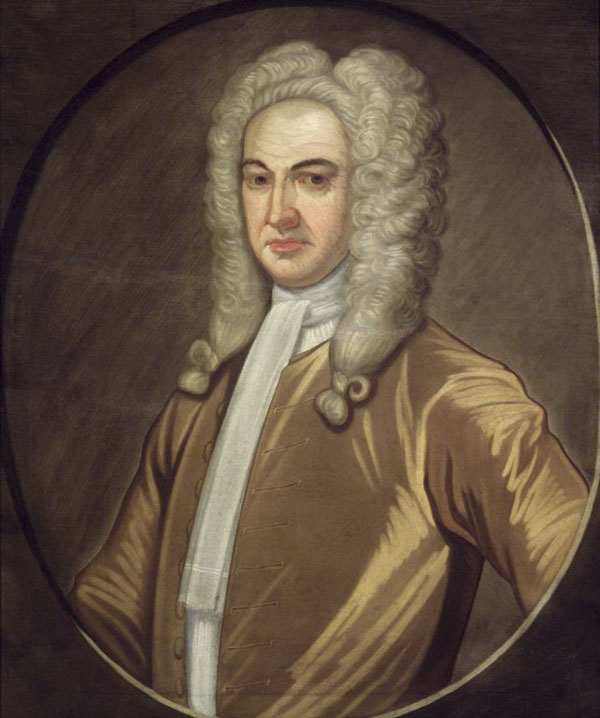 >
>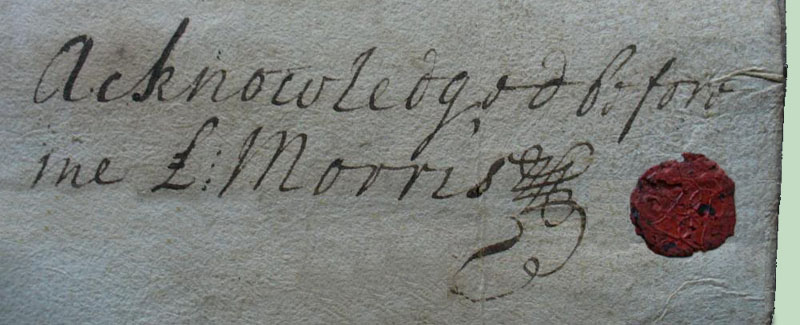


 Copyright © 2002, Mary S. Van Deusen
