|

 FAMILY TREE HOME
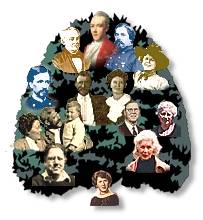
The Livingston Branch
UPDATED 11 May 2016 |


Philip, the Signer William Livingston Gilbert Livingston and Cornelia
Henry Livingston, Sr. Gilbert Livingston and Catharine Rev. John Henry Livingston
Henry Livingston, Jr. Robert R. Livingston, Jr. Edward Livingston Bob Livingston
|
| |
|
| |
|
The Livingstons were one of the prominent families of Falkirk, Scotland from the fourteenth to the eighteenth century. Mary Livingston was one of the "Four Marys" acting as Ladies in Waiting to Mary, Queen of Scots. The Roman Wall of Antonine runs through the estate. Trace the family back through the 5th Lord Alexander Livingston's wife, Agnes Douglass, and you find Elizabeth Stuart, the wife of James Douglass, Lord Dalkirth. Go a little further back and you come upon Kings Robert I, II and III of Scotland and back further to Robert the Bruce. That name, Robert, certainly does seem to have staying power. 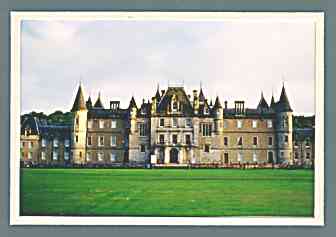 Callendar House Photograph courtesy of Phil Morgan
| |
|
| |
|
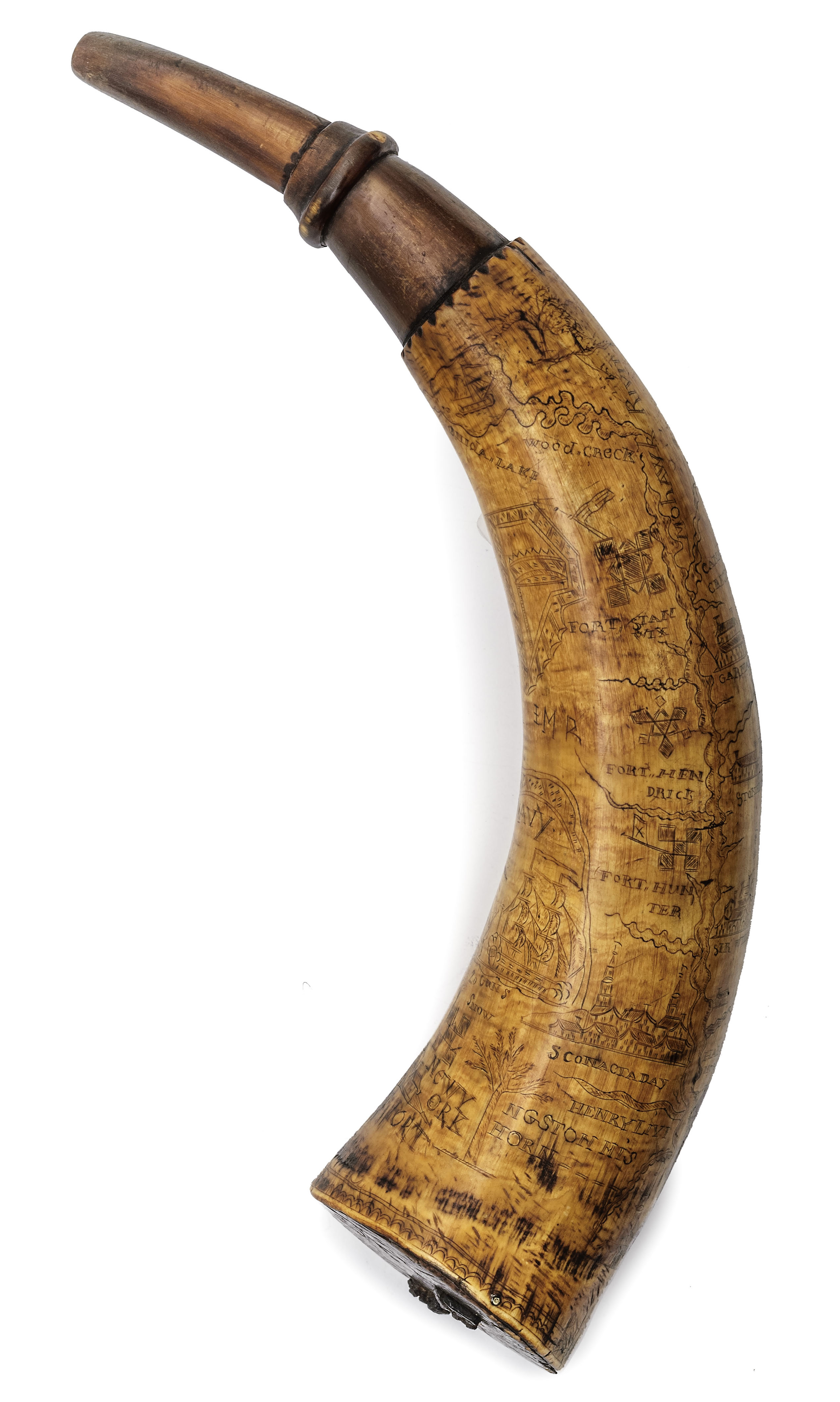
He prepared himself at Glasgow College, and in 1625, when the holy fire fell at Stewarton, he began to preach Christ. The True Church was quick to perceive the grace of God in him, and in many places his pastoral services were eagerly sought. But everywhere the Bishop forbade his settlement. His warm evangelism was highly oftensive to the "moderate" palate, and so young Livingston entered the furnace. For five long years he remained there. It was a heavy trial. With a heart hungering to preach Christ, with fields of service invitingly opened before him, he was held back by the grim hand of the royal episcopate. But, though he knew it not, God' s hand was quietly overruling the enemy' s purpose, and refining him for a glorious task. And now we have to note, as so often before in the story of Revival, how God made use of a seemingly fortuitous circumstance to further His great purpose of grace. It happened that some ladies of high rank, who mourned in secret the decline of the Reformed Faith, were travelling in the neighbourhood of Shotts when their carriage broke, down. The accident took place beside the manse. The minister, Mr. Hance, hastened out and invited them to shelter under his roof until repairs were completed. They gladly did so, and finding the minister' s house was sadly dilapidated, and indeed in a still more parlous state than their carriage, they returned his kindness soon afterward by building a new manse in a better situation. Kindness begets kindness. When Mr. Hance waited upon the ladies to thank them, he asked if there was anything he could do to express his gratitude. Then they ventured to make a bold request, a request that was the real outcome of their secret prayers. Would he open his church at the coming sacrament to some of the persecuted ministers, whom they named? Mr. Hance at once consented, and amongst those named was the young man, John Livingston. The communion was fixed for June 20th, 1630. Great interest was aroused, and from all parts a vast assembly was gathered together. Rich blessing followed the Word at the Sabbath services, so rich indeed that it was felt they could not part without an added day of thanksgiving. And it was on this added day that God outpoured the superabundant blessing. After much persuasion Livingston consented to preach on the morrow. Finding their hearts too full of joy for sleep, many formed themselves into little companies, and spent the whole night in fervent devotion, in praise and supplication. The young preacher was one of these praying bands, and when the morning came a sore trial beset him. As he thought of the great, expectant multitude, he was overwhelmed by a sense of utter unworthiness, incompetence, and insufficiency. All strength seemed to leave him, and he was brought down to the dust of death. So real and painful was the abasement that he gave up all thought of preaching, and was preparing to steal away through the fields when his friends gathered about him, and constrained him to remain. And so, on June 21st, in the Churchyard of Shotts, John Livingston stood up amongst the people, feeling himself the weakest and least of God' s creatures. Then was fulfilled the saying of the prophet Hosea, "When Ephraim spake trembling, he exalted himself in Israel." God uplifted him and perfected His strength in the young man's weakness. His text was Ezekiel 36. 25, 26: "Then will I sprinkle clean water upon you and ye shall be clean. A new heart also will I give you, and a new spirit will I put within you." As he expounded it, burning thoughts and burning words filled his heart and lips. For an hour and a hal.f he preached to a people Who seemed rooted to the ground in a great stillness, Then when he thought he must close, again the Spirit filled him with a fulness that must be outpoured, and for another hour he continued with a melting of heart and liberty of utterance he never experienced before and never after. Five hundred men and women, some from the high ranks of society, some poor wastrels and beggars, were converted where they stood, and lived from that day as those who had indeed received a new heart and a new spirit. The memory of that day has never died, and the very telling of its story, as at Kilsyth, has proved a fount of revival.
I had no inclination to the ministry, till a year or more after I had passed my course in the college; and that, upon this occasion, I had a bent desire to give myself to the knowledge and practice of medicine, and was very earnest to go to France, for that purpose, and propounded it to my father, that I might obtain his consent, but he refused the same. Also, about the same time, my father having before purchased some land in the parish of Monyabroch, the rights whereof were taken in my name, and that land by ill neighbours being in a manner laid waste, and Sir William Livingston of Kilsyth, one of the lords of session, being very desirous to buy that land, that he might build a burgh of barony upon it at Burnside, my father propounded that I should go and dwell on that land and marry: but finding that that course would divert me from all study of learning, I refused that offer, and rather agreed to the selling of it, although I was not yet major to ratify the sale. Now, being in these straits, I resolved that I would spend a day alone before God, and knowing of a secret cave on the south side of Mouse water, a little above the house of Jervis wood, over against Cleghorn wood, I went thither, and after many to's and fro's, and much confusion, and fear about the state of my soul, I thought it was made out unto me, that I behooved to preach Christ Jesus, which if I did not, I should have no assurance of salvation. Upon this, I laid aside all thoughts of France, and medicine, and land, and betook me to the study of Divinity."
| |
|
| |
|
In Albany, Robert was secretary of the commissaries who superintended the affairs of Albany, Schenectady, and the parts adjacent, 1675-86. He was married in 1683 to Alida, daughter of Philip Pietersen Schuyler, and widow of Nicholas Van Rensselaer. In 1686 he received from Governor Thomas Dougan a grant of land comprising large parts of what was subsequently set off as Dutchess county, and the grant was confirmed by royal charter from George I., who erected the manor and lordship of Livingston. Robert Livingston was appointed to proceed to New York with his brother-in-law, Peter Schuyler, to obtain a charter for the manor from Governor Dougan, under which charter he was town clerk, 1686-1721. In 1689 he attached himself to the anti-Leisler faction. He was secretary of the convention held at Albany, Oct. 25, 1689, which, while it acknowledged the sovereignty of William and Mary, opposed Leisler's proceedings. When Richard Petty, sheriff of Albany, reported to Leisler that Livingston favored the Prince of Orange, Leisler ordered Livingston's arrest, and the latter retired to one of the neighboring provinces until the arrival of Sloughter, in March, 1691. In 1694 Robert made a voyage to England, was shipwrecked on the coast of Portugal, and obliged to travel through Spain and France by land. He returned to New York in 1696, accompanied by his nephew, Robert Livingston. While in England he was appointed by royal commission, dated Jan. 27, 1695-96, commissioner of excise, receiver of quit rents, town clerk, clerk of the peace, clerk of the common pleas for the city and county of Albany, and secretary for the government of the Indians in New York. He obtained for Robert Kidd a commission to rid the American seas of buccaneers; but Kidd himself turned pirate and the expedition failed. In September, 1696, the charge of alienation was preferred against him by the council, but through the influence of Lord Bellomont, who arrived in April, 1698, to take charge of the government, he was appointed one of the council, September, 1698, and in the autumn of 1700, was reinstated in all his offices. He was accused by the Leislerian commission of appropriating the public money for his own use, and of employing improper influences to induce the Indians to favor his going to England on behalf of their interests at the court. He refused to exonerate himself of the charge by oath and on April 27, 1701, his estates were confiscated and he was suspended from the council board. Through the intercession of Lord Cornbury he was vindicated. On Feb. 2, 1703, he regained his estates, and in September, 1705, he was reinstated in his former offices. He was elected a member of the assembly from Albany in 1711, and from his manor, 1716-25, serving as speaker 1718-25, when he retired on account of ill-health. He died in Albany, N.Y., April 20, 1725. Robert's oldest sons, Philip and Robert, became famous in their own right and produced a tree of famous descendants.
| |
|
| |
|
Upon his father's death in 1725, Philip became the second Lord of the Manor. He was married to Catherine, daughter of Peter Van Brugh, for many years mayor of the city of Albany. He had palatial residences in New York city, Albany and on the manor. His eldest son, Robert, became third and last Lord of the Manor, and Philip's daughter, Sarah, was married to William Alexander (Lord Stirling) (q. v.) Philip Livingston died in New York City, Feb. 4, 1749.
| |
|
| |
|
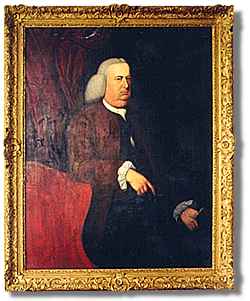
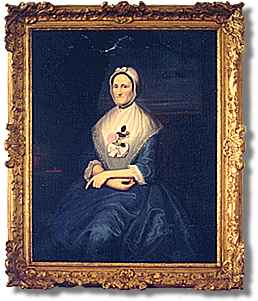
He was one of the seven aldermen of the city, 1754-63; a member of the provincial assembly, 1763-69 and speaker in 1768; a member of the committee of correspondence; a delegate to the stamp-act congress in October, 1765; a delegate to the Continental Congress, 1774-78, and at the first convention of that body he was one of the committee appointed to prepare an address to the People of Great Britain. He was one of the four delegates from New York who signed the Declaration of Independence.
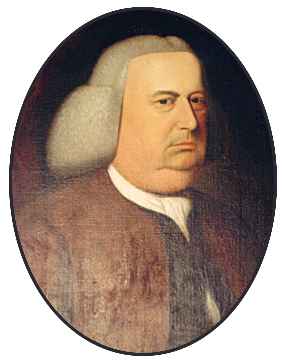
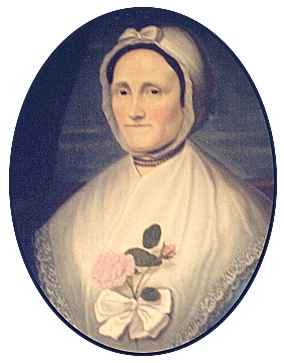
It was at Philip's residence on Brooklyn Heights, NY, that Washington held the council of war that decided on the retreat from Long Island in 1776. He was a member of the state assembly and in May, 1777, was chosen state senator. He was one of the founders of the New York Society library in 1754; of the chamber of commerce in 1770; and one of the governors of the New York hospital in 1771. In 1746 he aided in founding the Livingston professorship of divinity at Yale, and was prominent in the establishment of King's college. Philip married Christina, daughter of Richard Ten Broeck, recorder of Albany, and died while in attendance at the 6th session of the Continental Congress, at York PA, June 12, 1778.
| |
|
| |
|
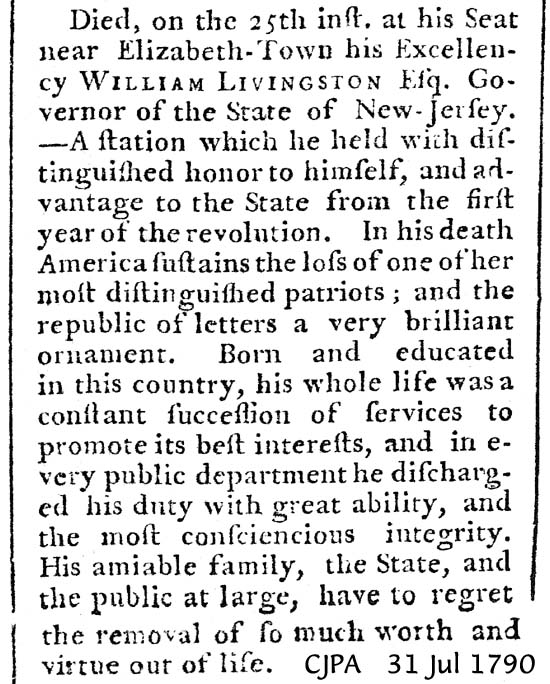
Rejecting his family's hope that he would enter the fur trade at Albany or mercantile pursuits in New York City, young Livingston chose to pursue a career in law at the latter place. Before he completed his legal studies, in 1745 he married Susanna French, daughter of a well-to-do New Jersey landowner. She was to bear 13 children. Three years later, Livingston was admitted to the bar and quickly gained a reputation as the supporter of popular causes against the more conservative factions in the city. Associated with the Calvinists in religion, he opposed the dominant Anglican leaders in the colony and wielded a sharply satirical pen in verses and broadsides. Livingston attacked the Anglican attempt to charter and control King's College (later Columbia College and University) and the dominant De Lancey party for its Anglican sympathies, and by 1758 rose to the leadership of his faction. For a decade, it controlled the colonial assembly and fought against parliamentary interference in the colony's affairs. During this time, 1759-61, Livingston sat in the assembly. In 1769 Livingston's supporters, split by the growing debate as to how to respond to British taxation of the colonies, lost control of the assembly. Not long thereafter, Livingston, who had also grown tired of legal practice, moved to the Elizabethtown (present Elizabeth), NJ, area, where he had purchased land in 1760. There, in 1772-73, he built the estate, Liberty Hall, continued to write verse, and planned to live the life of a gentleman farmer. The Revolutionary upsurge, however, brought Livingston out of retirement. He soon became a member of the Essex County, NJ, committee of correspondence; in 1774 a representative in the First Continental Congress; and in 1775-76 a delegate to the Second Continental Congress. In June 1776 he left Congress to command the New Jersey militia as a brigadier general and held this post until he was elected later in the year as the first governor of the state. Livingston held the position throughout and beyond the war--in fact, for 14 consecutive years until his death in 1790. During his administration, the government was organized, the war won, and New Jersey launched on her path as a sovereign state. Although the pressure of affairs often prevented it, he enjoyed his estate whenever possible, conducted agricultural experiments, and became a member of the Philadelphia Society for Promoting Agriculture. He was also active in the antislavery movement. In 1787 Livingston was selected as a delegate to the Constitutional Convention, though his gubernatorial duties prevented him from attending every session. He did not arrive until June 5 and missed several weeks in July, but he performed vital committee work, particularly as chairman of the one that reached a compromise on the issue of slavery. He also supported the New Jersey Plan. In addition, he spurred New Jersey's rapid ratification of the Constitution (1787). The next year, Yale awarded him an honorary doctor of laws degree.
Livingston died at Liberty Hall in his 67th year in 1790. He was originally buried at the local Presbyterian Churchyard, but a year later his remains were moved to a vault his son owned at Trinity Churchyard in Manhattan and in 1844 were again relocated, to Brooklyn's Greenwood Cemetery.
| |
|
| |
|
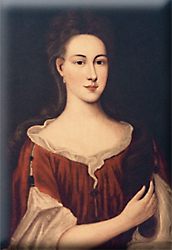
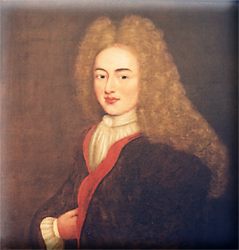
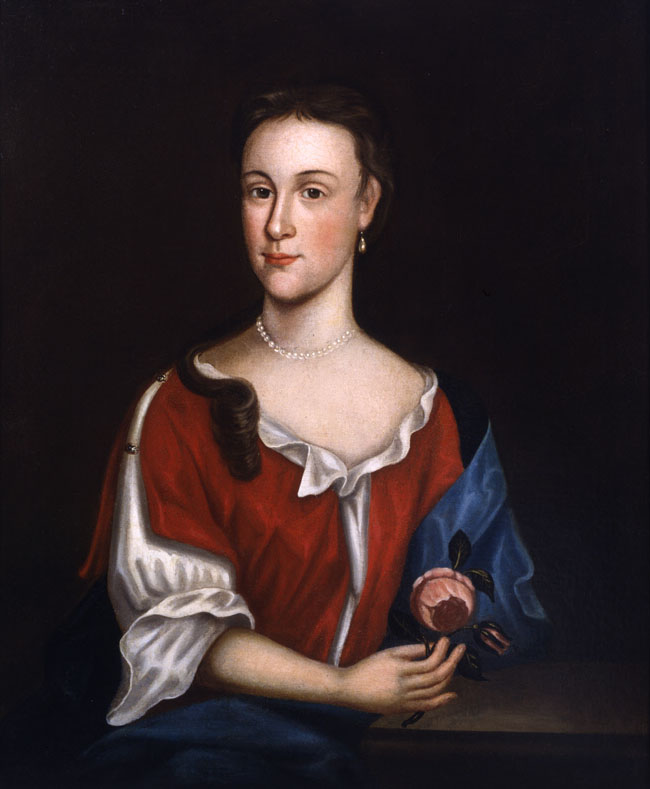
HUBERTUS or GILBERT LIVINGSTON, fourth son and sixth child of Robert Livingston and Alida (Schuyler-Van Rensselaer) Livingston, was born March 3, 1690. He was registrar of the Colonial Court of Chancery in 1720, and county clerk of Ulster the same year. From 1728 to 1738 he was a member of the Assembly for the Manor; major of Dutchess County militia and received the commission of lieutenant-colonel in 1739. Under his father's will he inherited one-seventh part of the Saratoga patent. It was on this land that General Burgoyne surrendered to General Gates in October, 1777. Died, April 25, 1746, at Kingston NY. Married, December 22, 1711, Cornelia Beekman, daughter of Colonel Henry Beekman and Johanna (de Loper-Davidson) Beekman, daughter of Captain Jacob Lugt de Loper, of Stockholm, and widow of Joris Davidson. Cornelia Beekman was born June 18, 1693; baptized August 15, 1693; died June 24, 1742. 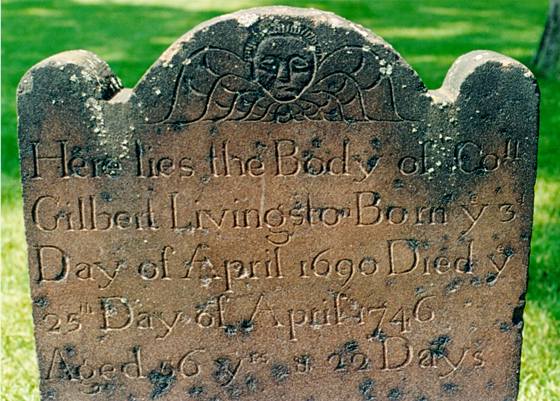
| |
|
| |
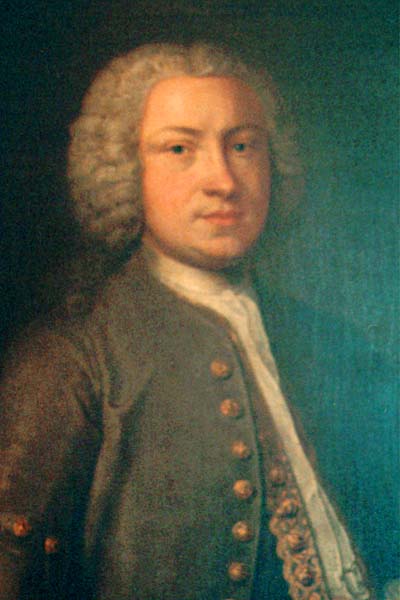
Henry Sr., moved to Poughkeepsie from Kingston with the blessings of his parents, Gilbert Livingston and Cornelia Beekman, and rented a house from Captain John Jan Conklin, a Poughkeepsie militia commander and local landowner, who owned about 1700 acres on the Hudson River. But a house was the least of what Henry Sr. was after from the Conklins. What he wanted was the Conklin's 17 year old daughter Susannah. Both families were against the match for reasons now lost but, in 1742, the young man took the matter into his own hands, and Susannah onto his horse, and the couple eloped. By December of that year their first child, Gilbert, was born, and Captain Conklin was reconciled enough to sell his son-in-law the house in which the couple lived. Gilbert's birth was followed by John Henry's in 1746, and by Henry Jr. two years later. Because his uncle, Colonel Henry Beekman, had only a daughter, Henry Sr. took on many of the tasks for his uncle that a son would have performed, acting as land agent and political lieutenant until the Colonel's daughter Margaret married, and Beekman's son-in-law, Robert R. Livingston (Henry Sr.'s first cousin), was able to take on the role. The property in Poughkeepsie was described by his son Henry Jr. in an article in the New-York Magazine; or, Literary Repository in the following way: 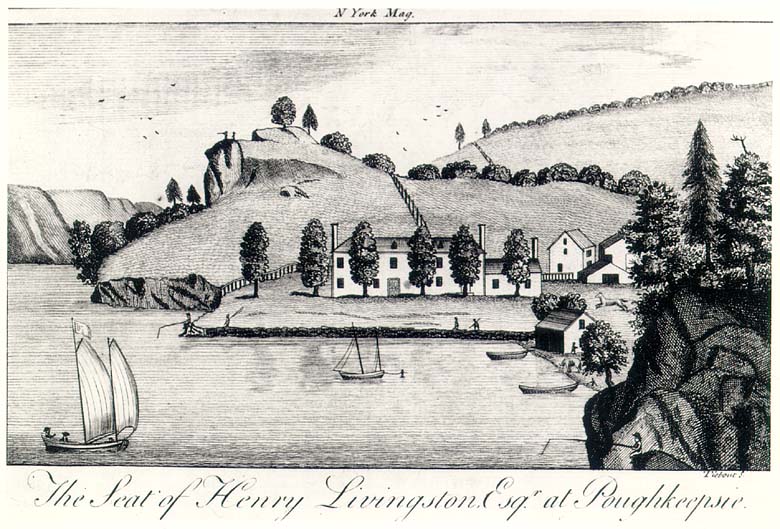 THE seat which the annexed plate is designed to represent, is situated midway between the cities of New-York and Albany, and something more than a mile from the town of Poughkeepsie. Although the mansion is far from being magnificent -- although no artificial fountains sprinkle the parterres, or statues or pagodas are seen in the gardens, nor any extraordinary effort of expence exhibited; yet nature, in her kindliest mood, has undulated the hills around, smoothed the terrene where the buildings are erected, laved the shores with the majestic Hudson, and made the whole delightful -- so it is, that no voyagers of taste pass it, without acknowledging its rural beauties; and none visit it, without receiving impressions in its favour. An ad in the Poughkeepsie Journal after Henry Sr's death described the property. The delightful Mansion and Farm, of about eighty acres, of the late Henry Livingston, Esq of the town of Poughkeepsie, in Dutchess county. This place has been long and deservedly celebrated for its conveniences and elegance, being possibly the most delightful spot which the banks of the Hudson afford; those who know it need no information.In his later years, Henry Sr. went blind and his duties as Clerk of Dutchess County were taken over in 1789 by his son, Robert Henry Livingston, who kept the position of Clerk until his own death only five years after his father's. Another son, Gilbert, was Surrogate for the county.
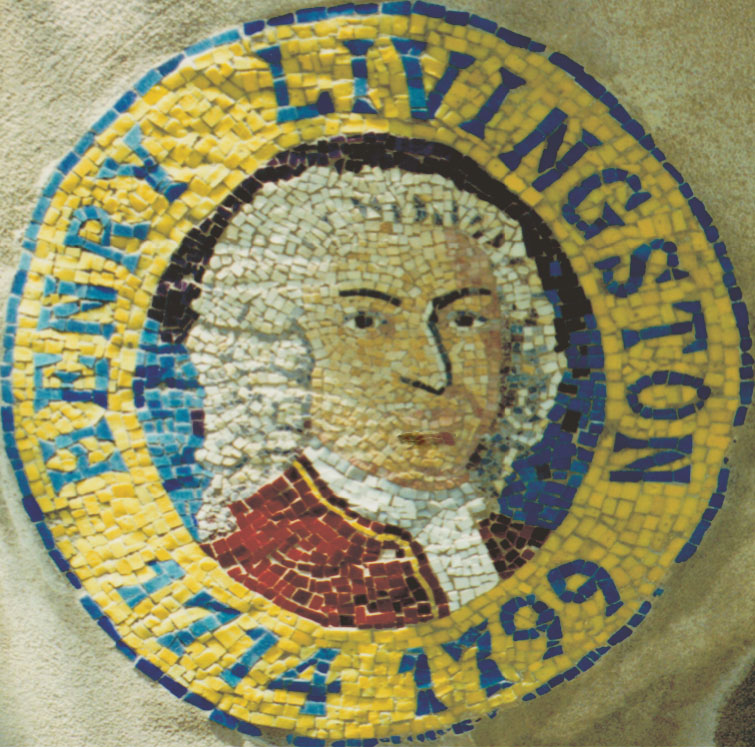
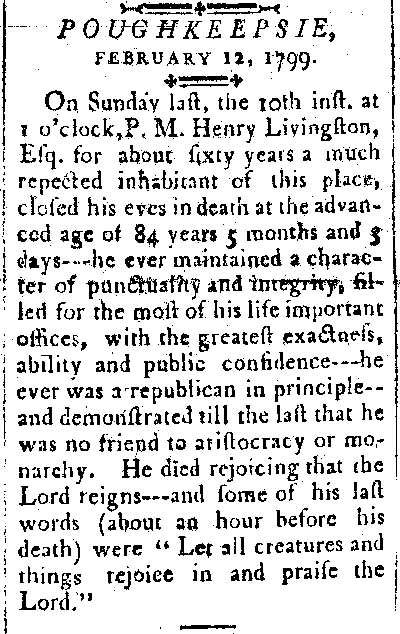
Henry Sr. died at his home in Poughkeepsie 10 Feb 1799.
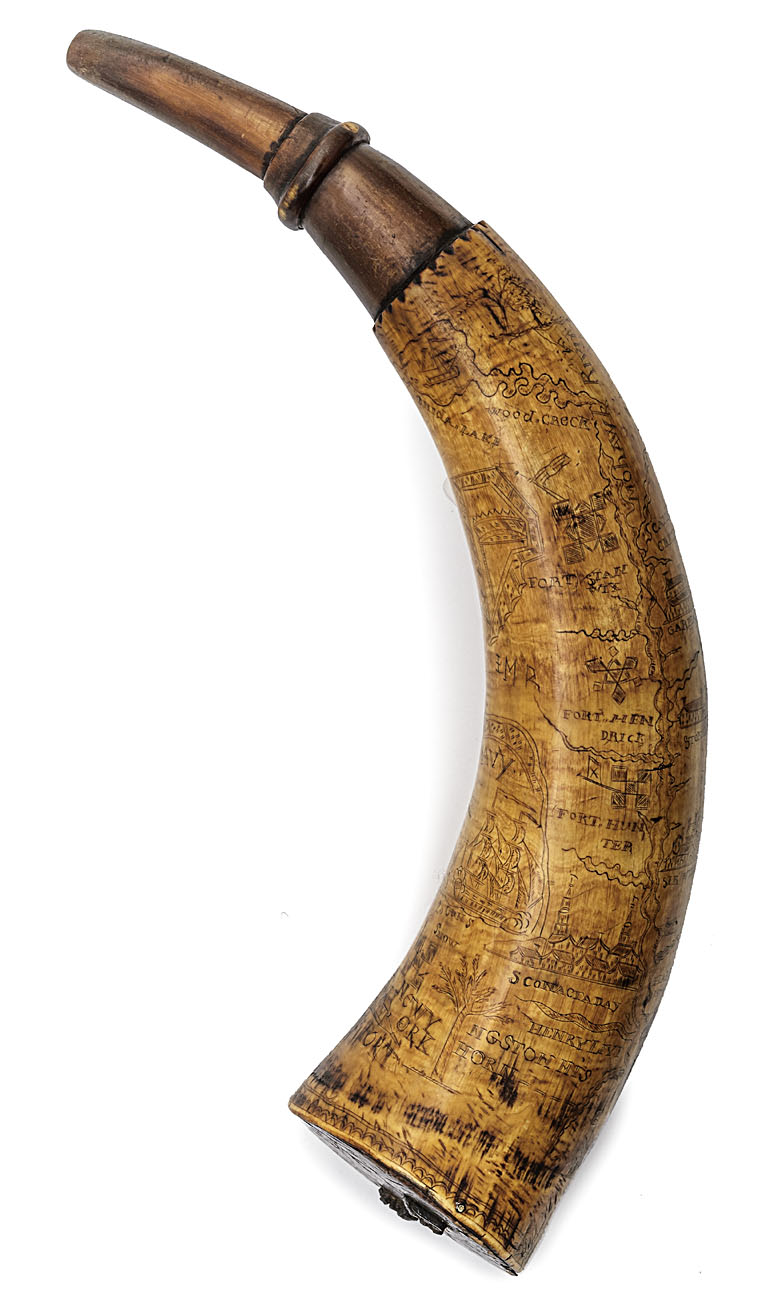
Larger Image
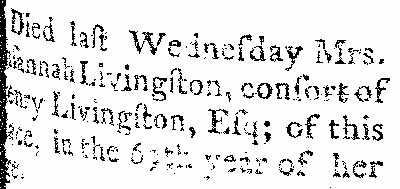
He was born September 8th, 1714, and died February 10th, 1799, at his paternal estate, which is situate in Dutchess county, near Poughkeepsie, on the banks of the Hudson, and which is now in the possession of his grandson, Col. H. A. Livingston, having belonged to the family for more than a century.
| |
|
| |
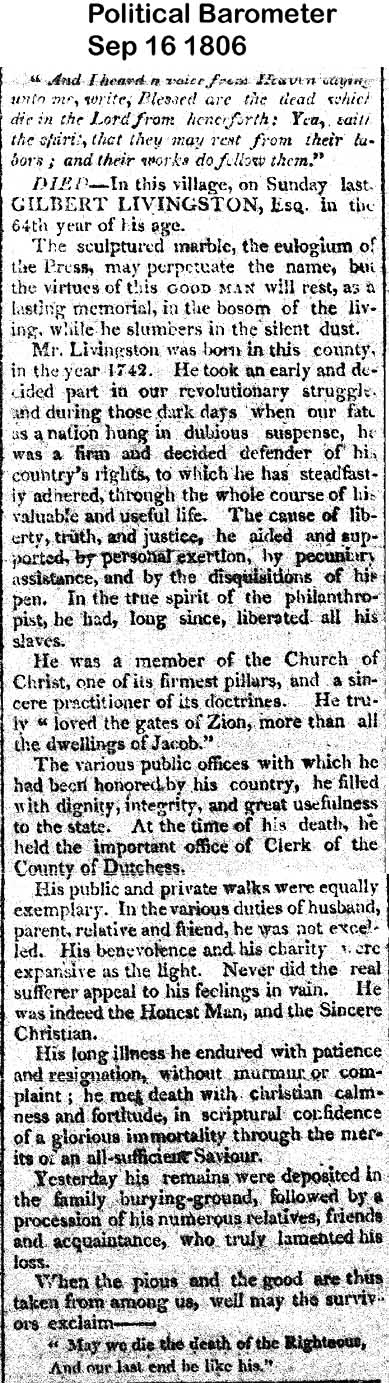
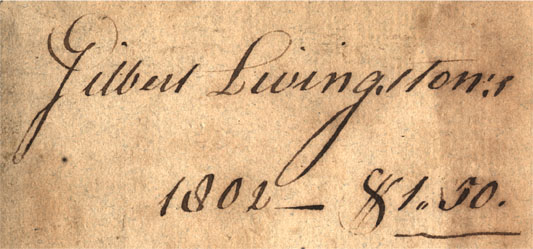 Gilbert Livingston was born 17 Dec 1742, the same year that his parents, Henry Sr. and Susannah, eloped. He was clearly a well-loved child. After Gilbert's birth, Susannah's father sold the house in which the newlyweds were living to Henry. When Gilbert was old enough to go to school, he was sent south to Fishkill to be educated by Rev. Chauncey Graham, a Congregational minister and Yale graduate, the Congregational church and the Dutch Reformed Church sharing the same Calvinist roots. After all, his grandfather Gilbert had studied with Reverend Solomon Stoddard, a Congregational minister out of Northampton Massachusetts. Gilbert went on with his studies at King's College in 1756 and 1757, but left in '57 because of the smallpox epidemic. Back in Poughkeepsie, Gilbert read law with the prominent lawyer in town, Bartholomew Crannell, and commenced his legal career as Crannell's partner and, in 1763, Crannell's son-in-law. Gilbert and Catharine were married by Gilbert's former teacher, the Rev. Chauncey Graham. The problems for Gilbert came with the Revolutionary War. The Livingstons were, for the most part, ardent patriots. The Crannells, on the other hand, were Tories. Crannell and Rev. John Beardsley, the Rector of the Episcopalian Christ Church in Poughkeepsie, and son of Crannell's daughter Gertrude, escaped to New York City. Crannell's house was confiscated during the war as a home for Governor George Clinton when the government was meeting in Poughkeepsie. After the Revolution, Crannell and Beardsley emigrated to New Brunswick Canada, and Crannell's property was put up for auction and sold to his son-in-laws, Gilbert Livingston and Peter Tappen. Did we mention that Gilbert's brother Henry was Commissioner of Confiscation? Gilbert and his wife went to the city to see off his in-laws. Notwithstanding his in-law scandal, Gilbert moved rapidly forward in his law profession, and in the associated political world. His Livingston connections would have been invaluable, but it didn't hurt that his wife's sister's husband's sister was married to the Governor. Family was, after all, everything in the old New York small towns. Gilbert became a member of the NY Assembly in 1777, Surrogate in 1778, Master in Chancery in 1781, member of the New York Constitutional Convention in 1788, and a Presidential Elector for Thomas Jefferson in 1800. Still practicing law, Gilbert became the law partner of James Kent, who went on to become Chancellor of New York, and Chief Justice of the New York state Supreme Court. Kent was notoriously difficult personally, and when he and Gilbert split up, Gilbert took in Smith Thompson who, following Gilbert's lead, married Gilbert's daughter Sarah. Thompson was Secretary of the Navy in 1810, and thinking of running for President, when President Adams appointed him to the U.S. Supreme Court. After Sarah's death, Thompson married her first cousin, Elizabeth, the daughter of Gilbert's brother Henry. Deeply religious, a Deacon and Elder of the Dutch Reformed Church, Gilbert also early recognized the essential evil of slavery, and joined the Poughkeepsie branch of the Anti-slavery Society in 1787. Gilbert and Catharine were religious sponsors for a Negro child and for Gilbert's own sister Helena in 1767, for Catharine's sister's son, Peter Montgomery Tappan, in 1775, and for Gilbert's sister Alida's son, Melancthon Taylor Woolsey, in 1780.
Gilbert lived long enough to see his four grandchildren born. Brother Henry recorded Gilbert's death in the family bible. "My dear brother Gilbert died at his house in this town on Sunday the 14th September 1806 at one oclock p.m. after an illness of near a year, very similar to the last one of my late brother Robert."
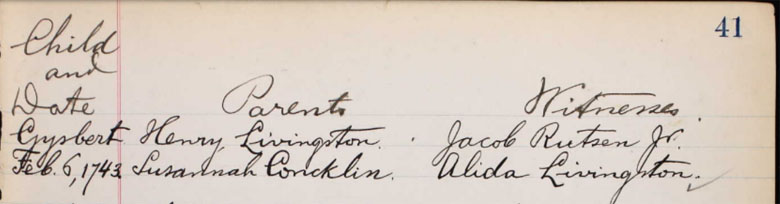 Baptismal Record, Kingston, Reformed Dutch Church
| |
|
| |
|
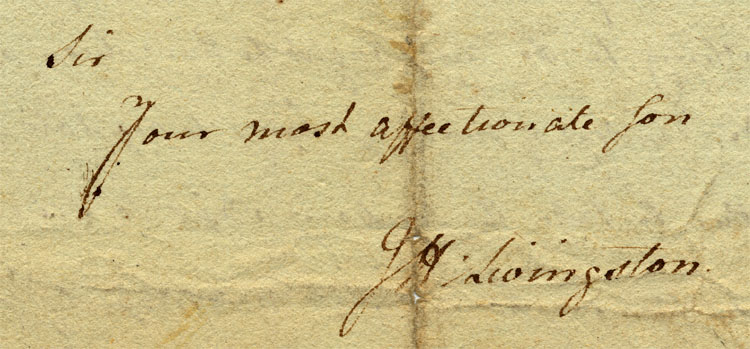
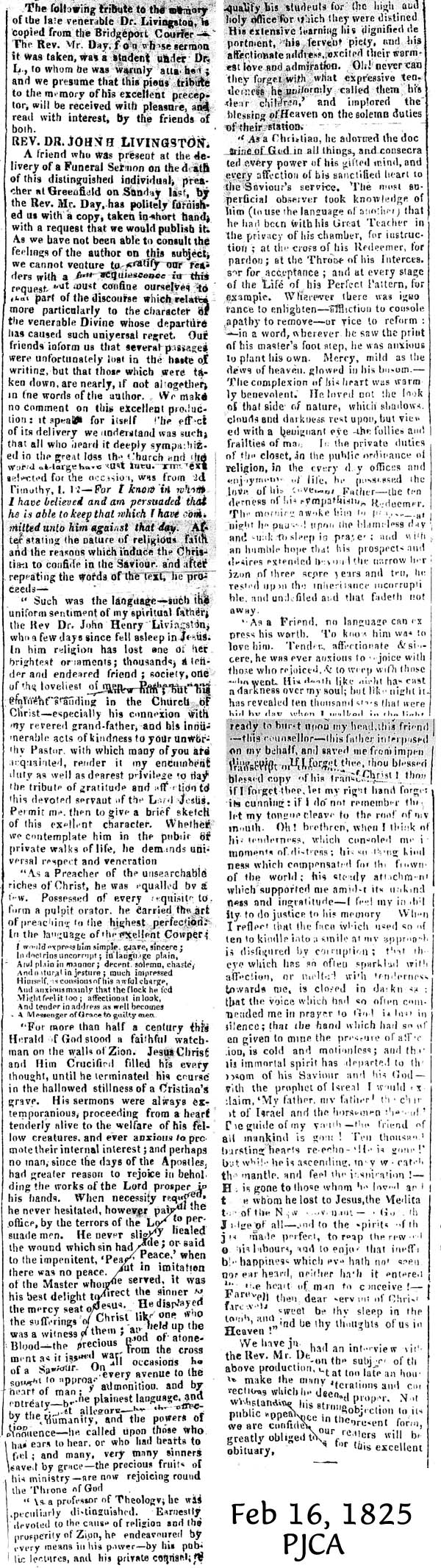
Like his older brother Gilbert, John Henry began the study of law under Bartholomew Crannell, but John Henry's dedication to his studies was so intense that his health broke. It was during this illness that John Henry began to meditate on the state of his soul, his father being a "divine of some eminence," according to a James Fennimore Cooper's biography of Melancthon Taylor Woolsey, the son of John Henry's sister Alida and Melancthon Lloyd Woolsey. John Henry had been named for his father and his great-great grandfather, Rev. John Livingston of Scotland, a famous Presbyterian preacher, whose autobiography was excerpted into John Henry's own many years later. It was during this period of reflection that John Henry attended the revival meeting of a British evangelist, George Whitefield. The sermon impressed itself so strongly on the young man that he decided that he should change careers and prepare himself for the ministry. Although he didn't know the Dutch language, he decided that the Dutch Reformed Church was the right ministry to follow, one of his hopes being that he could be instrumental in bringing back together the diverging Dutch and American branches of that church. In order to afford the academic preparation, he received funds from his parents that would be eventually taken out of his portion of his inheritance from them. Upon his return to New York, he took over as minister of a New York City Dutch Reformed Church, and performed the marriage of his sister Cornelia to Myndert Van Kleeck. Six years later, in 1775, the young minister was forced out of New York by the Revolution and the city's invasion by the British. John Henry became a chaplain for the Revolutionary army. 1775 was also the year that he married Sarah Livingston, his second cousin and the daughter of Philip Livingston, the signer of the Declaration of Independence. For a while the couple lived with her parents, but Philip was too prominent a target for safety. The couple moved in with his parents in Poughkeepsie but were forced to flee inland with the rest of the Livingston family, when the British admiral Clinton sailed up the Hudson River and fired on his father's home. Fearing for the security of patriots mentioned in his diary, John Henry burned the book - needlessly, as it turned out. That quality of throwing himself into whatever he was doing with such passion continued throughout his life. He exhausted himself being pastor and professor of theology. He tried to quit as pastor to gain time for himself, but ended up accepting the positions of theology profession and first President of Rutgers College. John Henry always stayed close to his family. He was with Henry and Sarah when their first child, Catharine, was born in 1775. In 1810 his sister Cornelia stayed with John Henry's family in her last illness. When Henry received word of his brother's death while still at Rutgers, Henry wrote in the family bible, "Died my brother the Revd. Doctor John H. Livingston at his house in the city of Brunswick in the state of New Jersey on the morning of Thursday the 20th of January 1825, without a pang or previous indisposition. The day preceding his decease he lectured the pupils of the Theological Seminary of which he was president, and evinced the full possession of his mental faculties. His age 78 years 7 months and 21 days." Henry survived his brother by only three years.
| |
|
| |
|
The Author of Night Before Christmas
A poet and classicist from his earliest days, Henry published extensively in newspapers and periodicals in Poughkeepsie and New York City though, almost always, anonymously, or under the pseudonym of "R". His writing had a wit and humor that he employed for his family and his friends. It was important enough in his life to be mentioned prominently in his obituary. Night Before Christmas was anonymously published in 1823 in the Troy Sentinel. Although the poem was submitted by someone who copied it at the home of Clement Moore, its authorship was not attributed to Moore until long after the death of Henry Livingston in 1828. Clement Moore finally took credit for the poem in 1837, but the Livingston family were not aware of this until a granddaughter saw a copy of a book with Moore's name on it in the 1860's. Although they were shocked seeing the attribution, the family just complained among themselves. But a growing group of descendants were being raised with the story of their parents hearing the Major recite the poem to them around 1808, and these stories were told to the children before Moore's attribution was ever made public. Starting in about 1880, descendants started trying to straighten out the record. Cornelia Griswold Goodrich was the first to gather together the family stories, and to reach out publicly. After that, the fight was taken up by Dr. William Sturges Thomas, and then by his son, W. Stephen Thomas. Both were able to argue their cases enough to bring over converts, such as Daniel McCracken, the president of Vassar. But their voices weren't loud enough to penetrate through the tradition that had grown up around Moore's claim. What it took was an expert in anonymous text attribution, Don Foster, an English professor at Vassar who lived only a few miles from where Henry Livingston is buried. Don's book, Author Unknown presents an argument for the authorship of the Christmas poem based on the literary analysis of style and influence. The book hit with massive publicity on October 26, 2000, with a two page article in the New York Times.
| |
|
| |
|
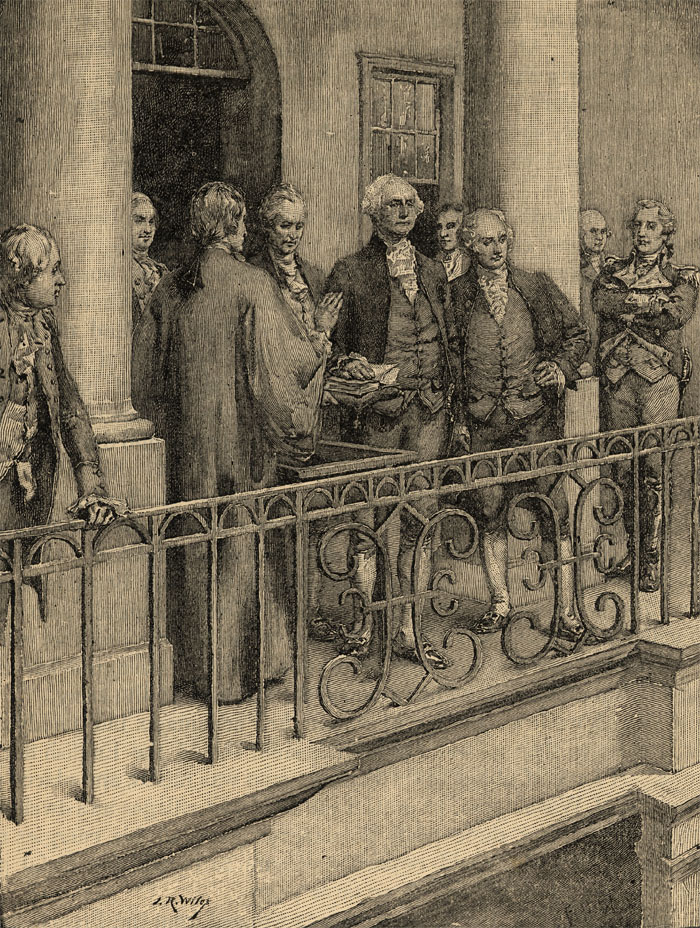
Livingston became politically active in the era of the Stamp Act Revolt, and was probably (along with his brother, William), involved with the Sons of Liberty in New York. In 1776, as a member of the Provincial congress of New York, he was selected to attend the Continental Congress. He was one of the committee to draft the Declaration of Independence but was recalled by his state before he could sign it. Livingston was appointed Secretary of Foreign Affairs (Secretary of State) soon after the Articles of Confederation were adopted. He served that post until 1783, when he was appointed Chancellor of the State of New York. He was an advocate for the Federal Constitution, and served as a delegate to the New York convention held at Poughkeepsie in 1788, to ratify it. On the 30th of April, 1789, Livingston administered the presidential oath of office to George Washington. In 1801, President Jefferson appointed Robert Livingston resident minister at the court of Napoleon. It was he who negotiated the Louisiana Purchase from the French. He was also a patron of Robert Fulton, who refined the steam engine. Chancellor Livingston died on the 26th of February, 1813, at the age of sixty six.
| |
|
| |
 A U.S. statesman, brother of the U.S. statesman and diplomat Robert R. Livingston, Edward Livingston was born
in Clermont, New York, and educated at the College of New Jersey (now Princeton University).
He practiced law
in New York City, and was a member of the U.S. House of Representatives from 1795 to 1801, and mayor of New York
City from 1801 to 1803.
A U.S. statesman, brother of the U.S. statesman and diplomat Robert R. Livingston, Edward Livingston was born
in Clermont, New York, and educated at the College of New Jersey (now Princeton University).
He practiced law
in New York City, and was a member of the U.S. House of Representatives from 1795 to 1801, and mayor of New York
City from 1801 to 1803.
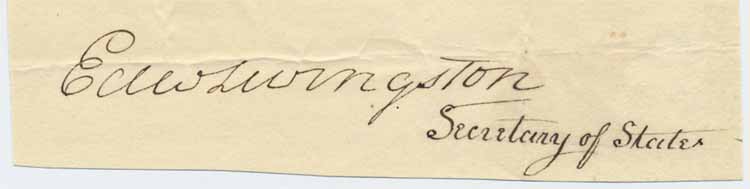
In 1804 he moved to New Orleans and, in 1815, served on the staff of Major General Andrew Jackson during the Battle of New Orleans. He drafted a legal code for Louisiana and represented the state in the U.S. House of Representatives from 1823 to 1829 and in the U.S. Senate from 1829 to 1831. He was U.S. secretary of state from 1831 to 1833 and minister to France from 1833 to 1835.
| |
|
| |
|
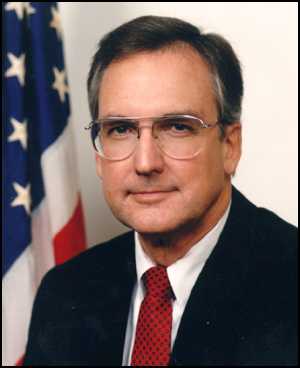 Those who argue for environment over heredity might want to look back at the history of the Livingston family. Bob Livingston, former Chair of the U.S. House of Representatives Appropriations Committee, held the very same seat held in 1829 by Edward Livingston, the son of Robert R. Livingston. Bob's own great-great-great grandfather, Henry Walter Livingston, was, himself, a member of Congress from 1803 to 1807. Bob is a direct descendent of Robert Livingston's son, Philip, the second Lord of Livingston Manor and Philip's son, Robert, the third Lord of the Manor. Both Philip and Robert were extensively involved in the political affairs of the time and worked actively for the interests of their local constituents, as well as for their new country. Bob is the 5th great-grandnephew of Philip, the Signer, and the 2nd cousin, 6 generations removed, from Robert, the Chancellor. Bob Livingston is actually the 4th Robert Linlithgow Livingston to carry the same name. From Robert the Bruce to Bob Livingston. There's just something in that name.
|
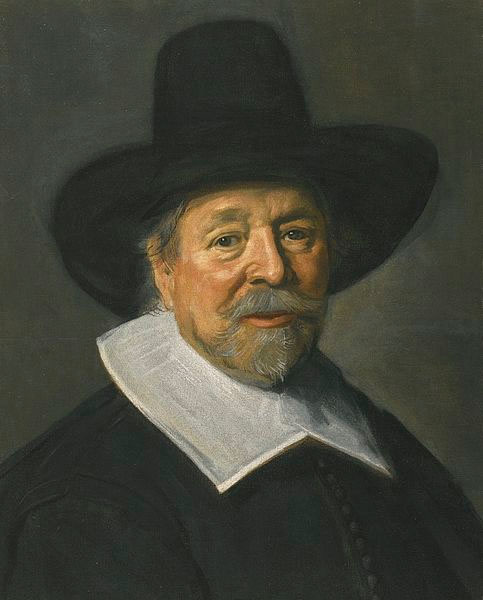 Old Time Revivals, John Shearer
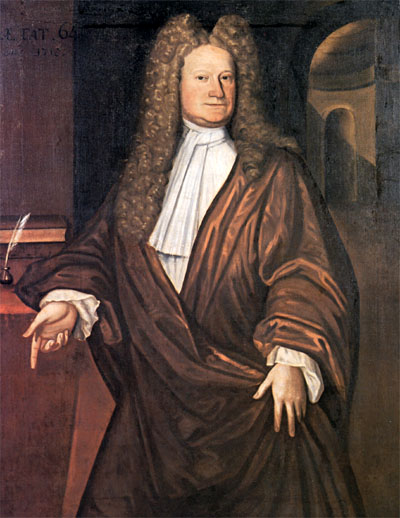 The 20th Century Biographical Dictionary of Notable Americans, Vol.6, p.458
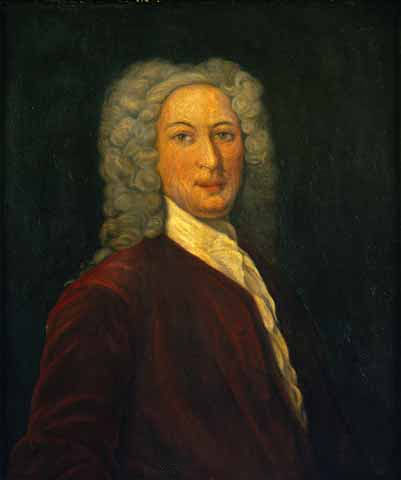 The 20th Century Biographical Dictionary of Notable Americans, Vol.6, p.457
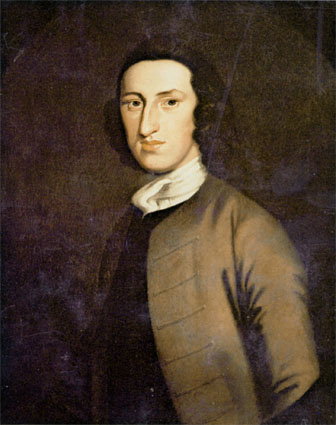 National Archives and Records Administration
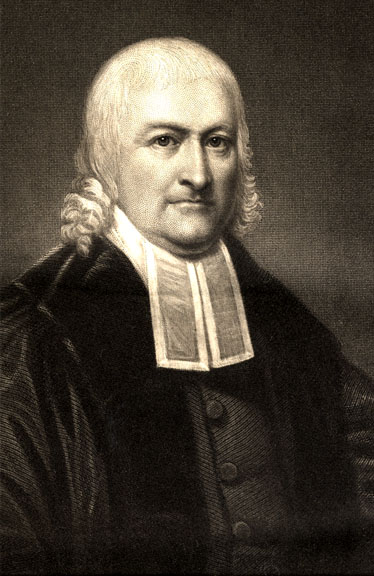 John Henry Livingston was the second child of Henry Livingston and Susannah Conklin - four years younger than brother Gilbert, and two years older than brother Henry. When he was 11, John Henry left the Academy of Rev. Chauncey Graham and began his preparations for college, entering Yale at the age of 12, and graduating at 16.
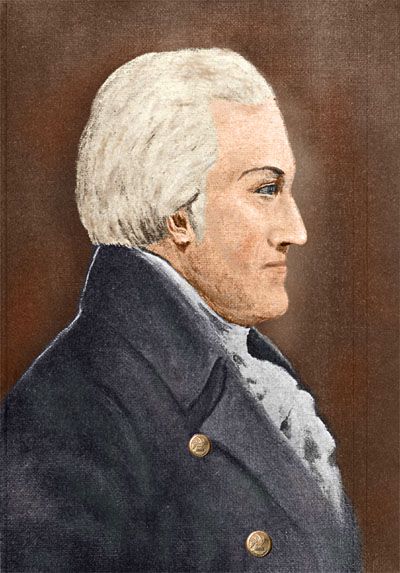 Born to the "Gilbert branch" of the Livingston family,
  The 20th Century Biographical Dictionary of Notable Americans, Vol.6, p.457