|

 FAMILY TREE HOME
The Arnold Branch
UPDATED 7 May 2016 |



|
| |
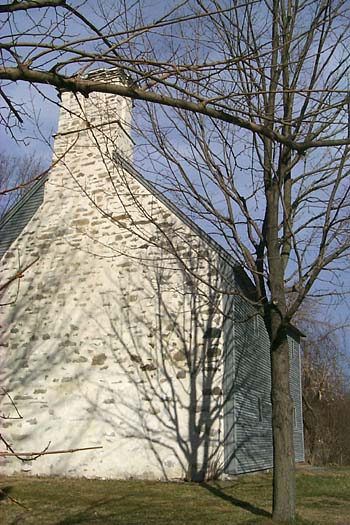
Eleazor Arnold and his parents (Thomas Arnold and Phebe Parkhurst) moved from Watertown MA, when he was ten years old, to join the Colony at Providence, RI with Roger Williams. His father was invested with about 20,000 acres of land which he purchased from the Indians. He erected his "mansion" in 1687 on the Great Toad to Mendon. The land he built on was fifty acres, left to him by his father at "World's End", near Scott's Pond. In 1672, when he was 21, his father Thomas first appears on the Town Council. In 1684 and 1685 Eleazer joins his father on the Council. In 1686 he serves without his father. It's also the first year Eleazer serves as Deputy of the General Assembly, a position he holds for eight non-successive years. He's also Justice of the Peace in 1705 and 1708-9. In 1710, Eleazar Arnold obtained a license from the Town of Providence to "keep a public house for the entertainment of strangers" and sale of liquor. Arnold was extraordinarily successful and prosperous, as shown by the inventory taken after his death, which showed he was worth 441 pounds in 1722
(I) Thomas (2), youngest son of Thomas (1) Arnold of Cheselbourne, England, came to America in the ship "Plain Joan," and settled in Watertowu, Massachusetts, May, 1635; made a freeman May 13, 1640. He seems to have been very remiss in attending church worship. as he was fined on three separate occasions, once fined twenty shillings for "offence against the law concerning baptism"; fined five pounds for "neglecting public worship twenty days"; and ten pounds for "neglecting same for forty days." He afterward removed to Providence, Rhode Island, where he became prominent. He was admitted a freeman of the Rhode Island Colony, May 18, 1658. In 1666-67-70-71-72 he was deputy to the general assembly. In 1672 he was member of the town council; died September, 1674, aged seventy-five years. The name of his first wife is not known; he married (second) Phoebe. died 1688, daughter of George and Susanna Parkhurst.
Children by first wife:
Children by second wife:
| |
|
| |
|
During the long wait for his trial, Arnold's financial position deteriorated due in part to his preference for the high life, and in part to the slowness of Congress in reimbursing him for the monies which he advanced from his own pocket for the support of his troops. The complaints of his treatment were listened to with sympathy by his new wife, Peggy Shippen, and her decided Tory leanings most likely magnified Arnold's sense of ill treatment. It was probably in this time period that the first British overtures to him were made. A year after charges were filed, Arnold was found guilty of two charges and, on 6 April 1780, received the ordered reprimand from General Washington. Though considered nothing but a tap on the wrist by many, Arnold perceived this sentence as a betrayal, even though he was subsequently given command over West Point. It was in this state of mind that Arnold listened to an offer from Major Andre, the British adjutant-general. The offer was for 20,000 pounds and a commission as major-general in the British army if Arnold succeeded in turning West Point over to the British. If he tried and the takeover failed, he was still guaranteed his expenses and a commission as a brigadier-general. But the plan never got that far because Andre was captured before he could return to his ship. The papers found on him were evidence of the plot and it was only because of a warning by a courier of Andre's that Arnold was able to flee in time to avoid arrest. Andre was executed as an enemy spy, and Arnold took up arms with the British for the remainder of the war.
| |
|
| |
|
Who Was Who in the Union, p10 Meanwhile, he served in the state legislature and missed being elected its speaker. He was defeated for the U.S. Congress, as a member of the Republican Party, in 1858, but won two years later, serving from march 4, 1861, to March 3, 1865. Even while that body was in session, he served in a military capacity. He did not seek reelection in 1864, but became a treasury auditor for a little more than a year before resuming his practice and beginning a writing career.
|
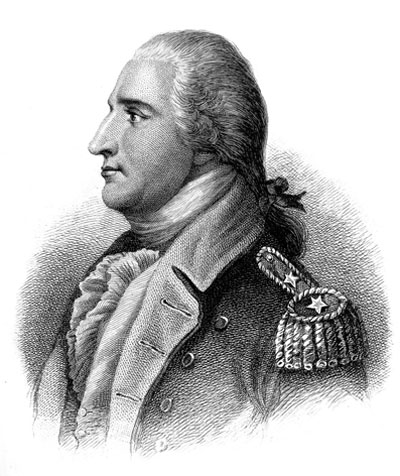 The seeds of Benedict Arnold's treason were probably sown in Philadelphia, where he was forced to defend himself
against court-martial charges brought by the Executive Council of Pennsylvania. Arnold's skills as a diplomat
did not match his skills as a military leader, and he was popular neither with the civilians he attempted to
govern nor the officers with whom he fought. He was considered to be impetuous and imprudent in speech,
with an overbearing personality and aggressiveness.
The seeds of Benedict Arnold's treason were probably sown in Philadelphia, where he was forced to defend himself
against court-martial charges brought by the Executive Council of Pennsylvania. Arnold's skills as a diplomat
did not match his skills as a military leader, and he was popular neither with the civilians he attempted to
govern nor the officers with whom he fought. He was considered to be impetuous and imprudent in speech,
with an overbearing personality and aggressiveness.
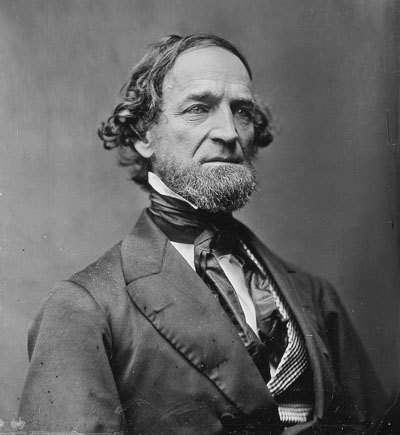

 Royal
Royal